Note: This article on gym performance tracking contains affiliate links. If you make a purchase through these links, The Iron Nutrition may receive a small commission at no additional cost to you. We only recommend products that we’ve tested and trust to help improve our performance.
Table of Contents
Introduction
Progressive overload is the one training principle that separates people who keep growing stronger for years from people who plateau after a few months. You can have the perfect diet, the best supplements, and a gym membership you never miss — but if you’re not applying progressive overload, your muscles have no reason to keep adapting.
It sounds technical, but the idea is simple: your body only changes when it’s forced to. Lift the exact same weight for the exact same reps forever, and your body settles into maintenance mode. It’s comfortable, but it’s not growth.
In this guide, you’ll learn exactly what progressive overload is, why it’s considered the single most important rule in strength training, and 6 practical ways to apply it — even if you’ve hit a plateau.
What Is Progressive Overload?
Progressive overload means gradually increasing the demands placed on your muscles over time. This can happen through more weight, more reps, more sets, more training frequency, less rest between sets, or better movement quality.
The key word is gradually. Progressive overload isn’t about adding 10kg to the bar overnight — it’s about small, consistent increases that add up to massive changes over months and years.
Think of it like this: your muscles adapt to the exact stress you give them. If that stress never increases, neither does your strength or size. Progressive overload is simply the process of continually giving your body a reason to adapt.
Why Progressive Overload Is the Only Rule That Really Builds Muscle
There are dozens of training philosophies, workout splits, and “hacks” floating around fitness content — but almost all of them work because they apply progressive overload in some form. Here’s why it matters so much:
- It’s the actual trigger for muscle growth. Muscles grow in response to mechanical tension. Without increasing that tension over time, there’s no biological reason for your body to build more muscle.
- It works regardless of your program. Whether you do push/pull/legs, full body, or bro splits, if you’re not progressively overloading, results will stall no matter how “optimized” your split is.
- It prevents wasted years in the gym. Many lifters train hard for years without visible progress simply because they never increase the demand on their muscles — they just repeat the same weights indefinitely.
- It gives you an objective way to know you’re improving. Instead of guessing, you can look at your training log and see, in black and white, whether you’re actually overloading your muscles. For deeper scientific context on how mechanical stress drives tissue adaptation, you can review published literature via the National Institutes of Health.
6 Ways to Apply Progressive Overload
You don’t need to increase everything at once. Pick one or two of these methods and apply them consistently — that’s enough to keep making progress for a long time.
1. Add Weight to the Bar
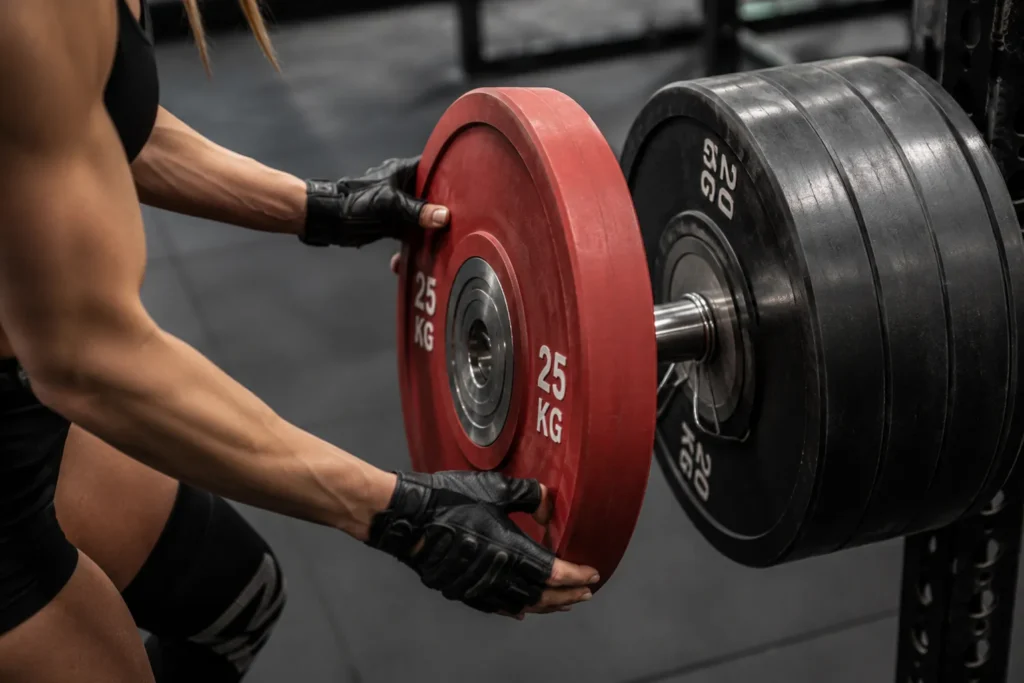
The most obvious method: increase the load whenever you can complete all your prescribed reps with good form. Even small jumps — 1–2.5kg — add up significantly over a year of consistent training. To help keep these metrics organized, you can use a structured 12-Week Fitness Tracker & Food Journal.
2. Add More Reps
If you can’t add weight yet, add reps at the same weight. Going from 3 sets of 8 to 3 sets of 10 at the same load is still progressive overload, and it’s often a safer entry point for beginners.
3. Add More Sets
Increasing total training volume — for example, going from 3 to 4 sets of an exercise — increases the total workload your muscles handle, which is another valid form of progressive overload.
4. Increase Training Frequency
Training a muscle group twice a week instead of once, while keeping weekly volume reasonable, is a powerful way to progressively overload without necessarily adding more weight in a single session.
5. Decrease Rest Between Sets
Shortening rest periods while maintaining the same weight and reps increases the metabolic demand on your muscles, which can be a useful overload method, especially in hypertrophy-focused phases.
6. Improve Range of Motion and Form
Sometimes the same weight becomes a heavier stimulus simply by moving through a fuller range of motion or slowing down the eccentric (lowering) portion of the lift. This is a subtle but effective form of progressive overload, particularly useful when you’re not ready to add external load.
Common Mistakes With Progressive Overload
- Adding weight too fast. This is the most common mistake. Sacrificing form to hit a heavier number defeats the purpose and increases injury risk.
- Trying to overload everything at once. Increasing weight, reps, and sets simultaneously makes it impossible to know what’s actually driving your progress — or your fatigue.
- Ignoring recovery. Progressive overload only works if your body can recover from the increased demand. Without enough sleep and food, overload just becomes overtraining.
- Ego lifting instead of progressive overload. Occasionally lifting heavier out of ego, without a consistent plan, isn’t the same as systematic progressive overload — and it usually leads to injuries, not gains.
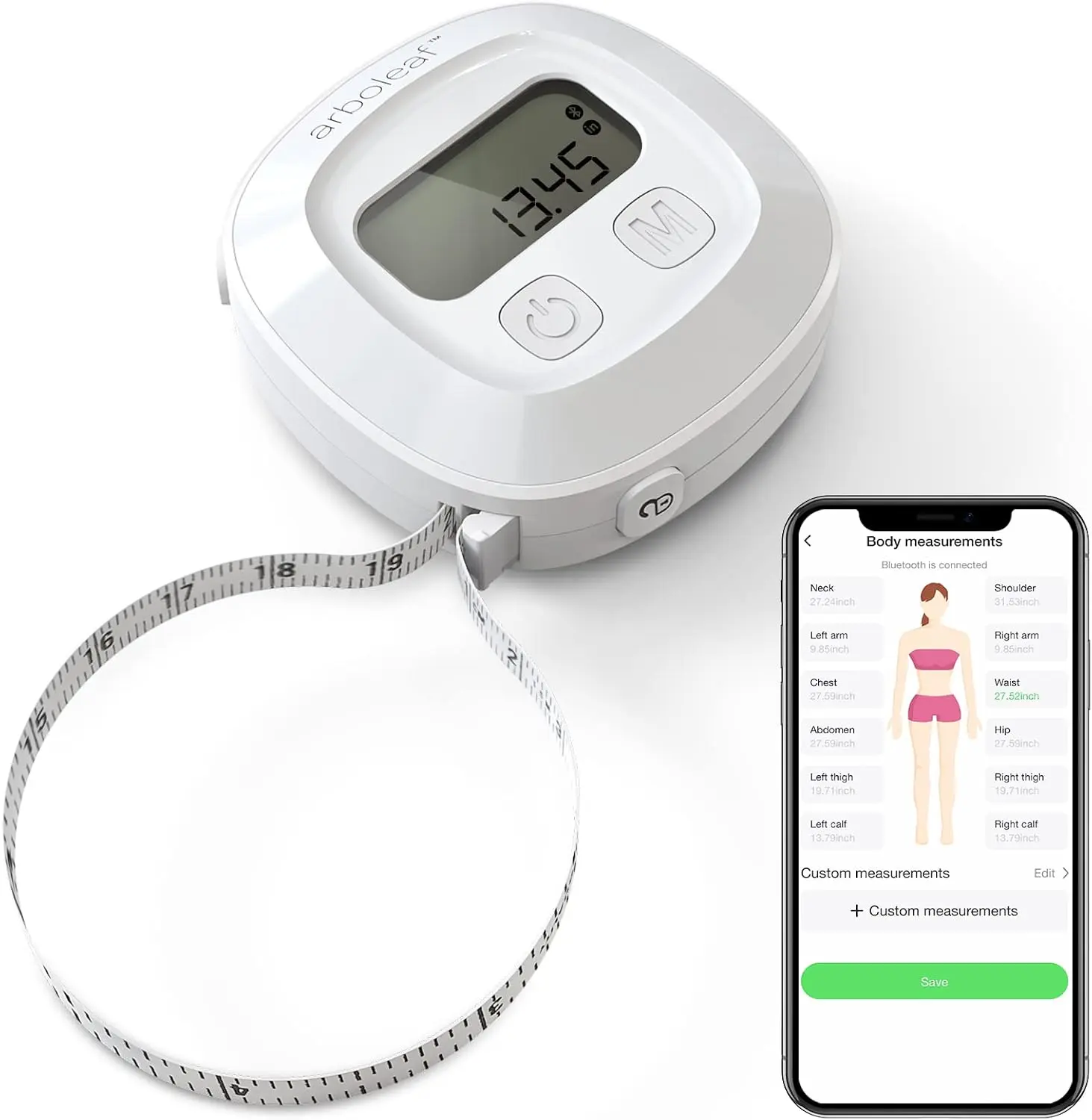
Track your fitness progress effortlessly with the Arboleaf Smart Body Measuring Tape. Syncs instantly via app to monitor key metrics like BMI and body fat percentage with precision.
How Often Should You Increase the Load?
For most lifters, small increases every 1–2 weeks on a given exercise are sustainable and effective. Trying to add weight or reps every single session usually isn’t realistic long-term, especially as lifts get heavier and closer to your genetic ceiling.
A simple rule: if you can complete all prescribed sets and reps with 1–2 reps left in the tank, it’s time to add a small amount of weight or an extra rep next session. To ensure your nutritional intake fully supports these strength milestones, check out our guide on Nutrient Timing.
How to Track Progressive Overload Without Overcomplicating It
You don’t need a complex spreadsheet to apply progressive overload correctly — you just need consistency. Keep a simple log with the exercise, weight, sets, and reps for every session, and glance back at your last entry before you start. That single habit removes almost all the guesswork.

Over time, patterns become obvious. You’ll see exactly which exercises are progressing smoothly and which ones have stalled for a few weeks — information you simply can’t get by relying on memory or “how the workout felt.” This is also where Gym Performance Tracking and progressive overload overlap: the log isn’t just a record of what happened, it’s the tool that tells you what to do next session.
Frequently Asked Questions About Progressive Overload
How long does it take to see results from progressive overload?
Most beginners notice strength increases within 2–4 weeks. Visible muscle growth typically takes 8–12 weeks of consistent progressive overload combined with proper nutrition and recovery.
Can I apply progressive overload with bodyweight exercises?
Yes. You can add reps, add sets, slow down the tempo, increase range of motion, or move to a harder variation (like progressing from knee push-ups to standard push-ups, or standard to decline push-ups).
What happens if I don’t apply progressive overload?
Your body has no reason to keep adapting, so strength and muscle gains will plateau, even if you keep training hard and consistently.
Is it possible to apply progressive overload every workout?
Not always, and that’s normal. Progress isn’t linear — some weeks you’ll add weight or reps, other weeks you’ll simply maintain while your body recovers and adapts.
Should beginners and advanced lifters apply progressive overload differently?
Yes. Beginners can often add weight almost every session because they’re far from their strength potential. Advanced lifters need more patience, smaller increments, and more attention to recovery and periodization.
Does progressive overload work for fat loss too?
Indirectly, yes. Maintaining or increasing strength during a fat loss phase helps preserve muscle mass, which keeps your metabolism higher and improves body composition results.
What’s the difference between progressive overload and just training hard?
Training hard means high effort in a single session. Progressive overload means a deliberate, tracked increase in demand over time. You can train extremely hard and still plateau if the actual stimulus never increases.
Final Thoughts on Progressive Overload
Progressive overload isn’t a trend or a hack — it’s the underlying mechanism behind virtually every strength and muscle-building result you’ll ever see. You don’t need a complicated program to apply it; you need consistency, a way to track your training, and the patience to increase the demand gradually over time.
Start today: pick one exercise from your next workout and aim to add one more rep, one more set, or a small amount of weight compared to last time. That’s progressive overload in action.