
Table of Contents
Introduction
Overtraining signs are often mistaken for normal training fatigue — which is exactly why so many lifters push through them for weeks, or even months, before realizing rest, not more effort, is what their body actually needs.
The frustrating part is that overtraining feels a lot like “just needing to try harder.” You’re tired, your lifts aren’t moving, so the instinct is to add another session, another set, another rep. In reality, that’s often the opposite of what your body needs — and it can turn a temporary dip into a much longer setback.
Here are 7 overtraining signs to watch for, what causes them, and how to know if rest — not more training — is the missing piece of your progress.
What Is Overtraining, Exactly?
Overtraining happens when the total stress you place on your body — through training, sleep loss, poor nutrition, and life stress combined — consistently exceeds your capacity to recover from it. Over time, this imbalance shows up as declining performance, persistent fatigue, and a higher risk of injury or illness.
It’s important to distinguish overtraining from normal, productive fatigue. Feeling tired after a hard session is expected. Overtraining is what happens when that fatigue never fully resolves, session after session, week after week. If you want to dive deeper into how recovery mechanisms and cellular restoration operate, take a look at our 5 Proven Post-Workout Protocols for Rapid Recovery. For clinical perspectives on physical strain, you can also read Healthline’s Guide on Overtraining Syndrome.
7 Overtraining Signs You Shouldn’t Ignore
1. Persistent, Unusual Fatigue
Feeling tired after training is normal. Feeling exhausted before you even start — or throughout the entire day, regardless of how much you sleep — is one of the clearest overtraining signs, especially when it doesn’t improve with a day or two of rest.
2. Declining Performance Despite Consistent Effort
If your lifts, endurance, or overall performance are getting worse instead of better, even though you’re training just as hard (or harder), this is a strong overtraining sign. Your effort is going up while your output is going down — a mismatch that pure “training harder” won’t fix. If you are struggling to gauge where your metrics should be, check out our guide on The 10 Best High-Protein Foods: Maximize Muscle & Metabolism to ensure your energy intake matches your output.
3. Elevated Resting Heart Rate
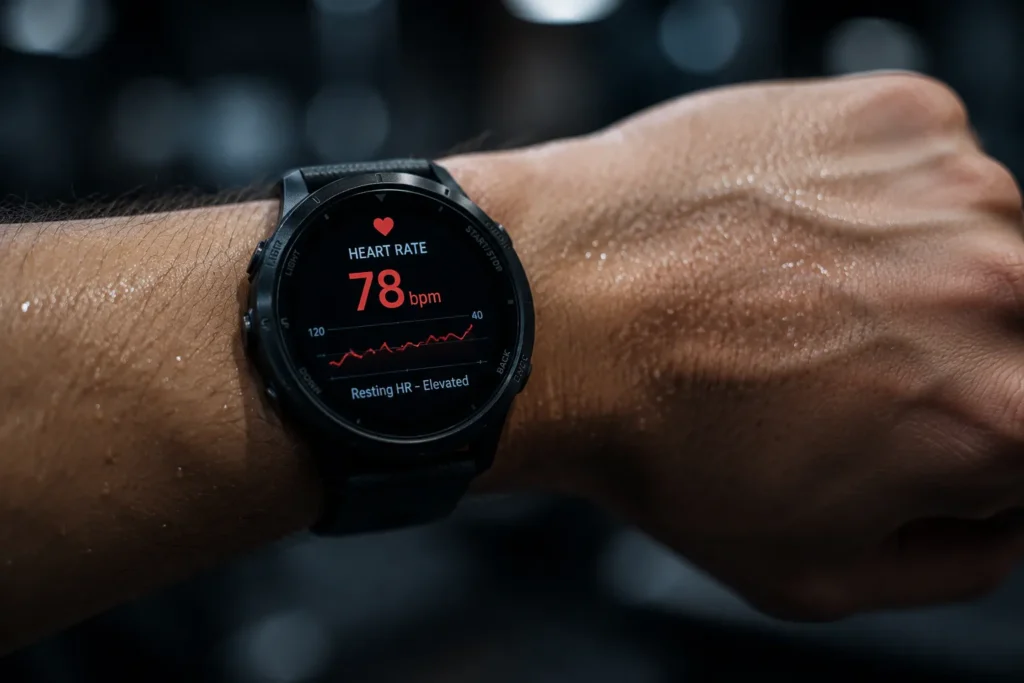
A resting heart rate that’s consistently 5–10+ beats higher than your normal baseline can be an early overtraining sign, often showing up before you consciously feel exhausted. This is one of the reasons wearables can be so useful for catching overtraining early.
4. Poor or Disrupted Sleep
Ironically, overtraining can make it harder to sleep well, even though your body desperately needs the rest. Elevated stress hormones from excessive training can interfere with falling asleep or staying asleep, creating a vicious cycle. To learn more about optimizing sleep architecture, visit the Sleep Foundation.
5. Increased Irritability or Mood Changes
Overtraining doesn’t just affect your body — it affects your mood. Increased irritability, anxiety, or a general sense of being “off” are common overtraining signs that are easy to attribute to unrelated life stress instead.

6. Frequent Illness or Slow-Healing Injuries
Chronic overtraining suppresses immune function, which is why lifters going through it often get sick more often or notice that minor injuries and niggles take much longer to heal than usual.
7. Loss of Motivation for Training You Normally Enjoy
When training starts to feel like a chore instead of something you look forward to, especially if this is a noticeable change from how you usually feel, it’s often one of the clearest psychological overtraining signs — and one of the easiest to dismiss as “just being lazy.”
Why Rest Might Be the Missing Piece
Many lifters interpret stalled progress as a sign to train harder — more volume, more frequency, more intensity. But if several of the overtraining signs above are present, adding more training stress usually makes things worse, not better.
Rest isn’t the absence of progress — it’s the condition that allows progress to actually happen. Muscle repair, hormone regulation, and nervous system recovery all occur during rest periods, not during the workout itself. Skipping rest when your body is already showing overtraining signs is like trying to build a house while continuously knocking down the walls you just put up.
How to Recover from Overtraining
- Take a deload week, reducing training volume and intensity by roughly 40–60% for 5–7 days
- Prioritize sleep, aiming for 8+ hours per night during the recovery period
- Optimize nutrition: Increase calorie and protein intake slightly, since recovery requires more resources, not fewer. If you need inspiration for clean, high-protein building blocks, browse our The High-Protein Bible: Top 10 Sources for Your Goals.
- Keep moving lightly: Add light, low-intensity activity — walking, easy cycling, mobility work — instead of complete inactivity.
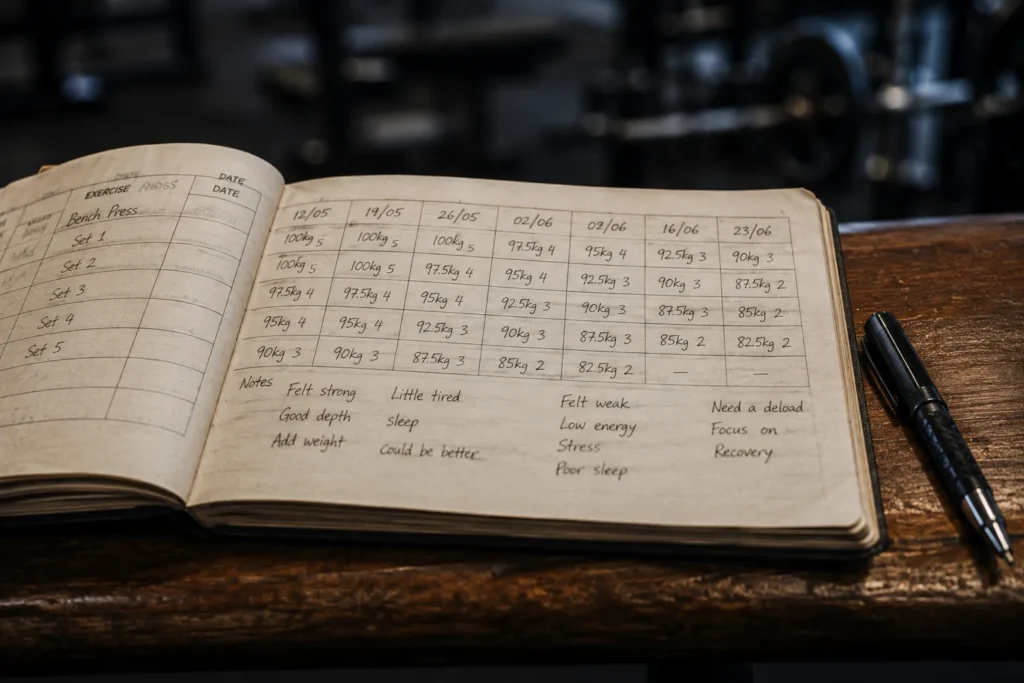
- Reassess your training log to identify whether volume, frequency, or intensity was the main driver of the overload
Most mild cases of overtraining improve significantly within 1–2 weeks of genuine rest. More severe or prolonged cases may take several weeks and benefit from a broader look at sleep, nutrition, and overall life stress.
Overtraining vs. Normal Training Fatigue: Knowing the Difference
One of the trickiest parts of spotting overtraining signs is that some fatigue is a completely normal, expected part of hard training. The key difference is duration and pattern. Normal fatigue peaks after a tough session and clearly improves within a day or two of rest. Overtraining fatigue lingers, doesn’t respond to a single rest day, and tends to show up alongside other signs — like mood changes, poor sleep, or a resting heart rate that stays elevated even on days off.
A useful mental check is to compare how you feel today to how you felt a month ago, rather than judging any single day in isolation. If energy, mood, and performance are trending downward over weeks despite consistent effort, that pattern is far more telling than any one rough workout — and it’s usually the clearest signal that recovery, not more training, is what’s actually needed.
How to Prevent Overtraining Going Forward
- Build deload weeks into your program every 4–8 weeks, even if you feel fine
- Track key markers — resting heart rate, sleep, mood, and performance — to catch overtraining signs early
- Increase training volume gradually, rather than making large jumps in a short period
- Treat sleep and nutrition as part of your training plan, not as optional extras
- Listen to consistent patterns, not single bad days — one rough session isn’t overtraining, but a month of them likely is
A Simple Way to Track Recovery Alongside Training
You don’t need a lab test to monitor recovery — a few simple numbers, checked consistently, are usually enough to catch overtraining signs early. Each morning, before getting out of bed, note your resting heart rate (most wearables or even a basic pulse check work fine), a quick 1–5 rating of how rested you feel, and how many hours you slept. Pair that with your regular workout log of weight, reps, and sets.
After 2–3 weeks, patterns tend to jump out clearly: a resting heart rate trending upward over several days, a string of “2 out of 5” energy ratings, or workouts that feel harder despite using the same weights are all early warning signs worth acting on before performance actually drops. This kind of lightweight tracking turns overtraining from something you only notice in hindsight into something you can catch — and correct — while it’s still a minor dip rather than a multi-week setback.
Frequently Asked Questions About Overtraining Signs
How long does it take to recover from overtraining?
Mild cases often improve within 1–2 weeks of proper rest and recovery. More severe or long-standing overtraining can take several weeks to fully resolve.
Can overtraining happen even with only 3–4 workouts per week?
Yes. Overtraining isn’t only about training frequency — it’s about total stress versus recovery capacity, which includes sleep, nutrition, and life stress alongside training itself, so even a modest workout schedule can tip into overtraining if the other pieces are neglected.
Is soreness the same thing as an overtraining sign?
Not necessarily. Normal muscle soreness that resolves within a few days is expected. Overtraining signs involve a broader pattern of fatigue, mood changes, and declining performance that doesn’t resolve with brief rest.
Should I stop training completely if I notice overtraining signs?
Not always. A deload week with reduced volume and intensity is often more effective than complete rest, since some light activity supports recovery without adding further stress.
Can wearables help detect overtraining signs early?
Yes. Metrics like resting heart rate, heart rate variability, and sleep quality can flag overtraining signs before they become noticeable through performance alone, which is exactly why pairing a wearable with a simple daily energy rating tends to catch problems earlier than relying on the gym log by itself.
Are overtraining signs different for beginners versus advanced lifters?
Advanced lifters training at higher volumes and intensities are generally more susceptible, but beginners can also overtrain, especially when combining several new stressors (a new program, poor sleep, and life stress) at once — often without realizing that stacking these changes all together removes their normal safety margin for recovery.
How do I know if it’s overtraining or just a bad training phase?
Look at the pattern over 2–3 weeks rather than a single session. If fatigue, mood, and performance are consistently declining despite adequate sleep and nutrition, it’s likely overtraining rather than a temporary rough patch.
Final Thoughts on Overtraining Signs
Overtraining signs are your body’s way of asking for recovery, not more effort. Ignoring them and pushing through usually extends the setback, while addressing them early — with a deload, better sleep, and more food — often resolves the issue within a couple of weeks.
Start today: compare how you feel right now to how you felt a month ago. If fatigue, mood, or performance have quietly gotten worse instead of better, that’s your body sending you an overtraining sign worth listening to — and rest, not another hard session, is usually the fastest way back to actual progress.