Quick answer: Across 8 separate self-experiments in the gym — grip strength, isometric holds, BFR training, cardio order, deload timing, Japanese walking, zone 2, and rucking — three patterns showed up repeatedly regardless of the specific method: the log mattered more than the tool, effort-based metrics (RPE) caught changes weight alone missed, and every “plateau” I almost quit on turned out to be progress hidden in a variable I wasn’t tracking yet. None of these patterns were visible from inside any single experiment; they only emerged once all eight logs sat side by side.
This blog has quietly turned into a running log of personal experiments. Every time I wrote a guide about a new method, I ran it on myself first — not as a gimmick, but because research tells you what happens to the average person in a study, and the only way to know what happens to you is to actually test it and write down the numbers. Six months and eight self-experiments in the gym later, some genuinely surprising patterns showed up that no single one of those posts could reveal on its own.
Table of Contents
The 8 Self-Experiments in the Gym, at a Glance
| Experiment | Duration | What I Tracked | Result |
|---|---|---|---|
| Grip strength training | 8 weeks | Dead hang time, farmer’s carry, pinch grip | Dead hang 22s → 58s; pinch grip was the slowest to respond |
| Isometric training | 6 weeks | Wall sit hold time + effort rating | Time looked flat at week 3; effort rating showed real progress underneath |
| BFR training | 5 weeks | Reps to near-failure, band-free retest | 22 → 29 reps at fixed load; 2-rep carryover confirmed on a normal set |
| Cardio order | 4 weeks | Squat RPE, weights-first vs. cardio-first | RPE 7 vs. 8.5 at the same weight, favoring weights-first |
| Deload timing | 1 week (deload) | Bench RPE, shoulder ache, before/after comparison | RPE dropped from 8.5 to 6.5 after a single deload week |
| Japanese walking | 2 weeks | Fast/slow interval pace, leg freshness | Noticeably fresher legs than equivalent jogging |
| Zone 2 training | 4 weeks | Talk-test-adjusted heart rate vs. 220-age formula | Formula underestimated max HR by roughly 10bpm |
| Rucking | Ongoing | Pack weight, distance, pace | Preferred over Japanese walking for grip and posture carryover |
What Surprised Me Most: 3 Patterns Across Every Experiment
1. The Log Mattered More Than the Method Itself
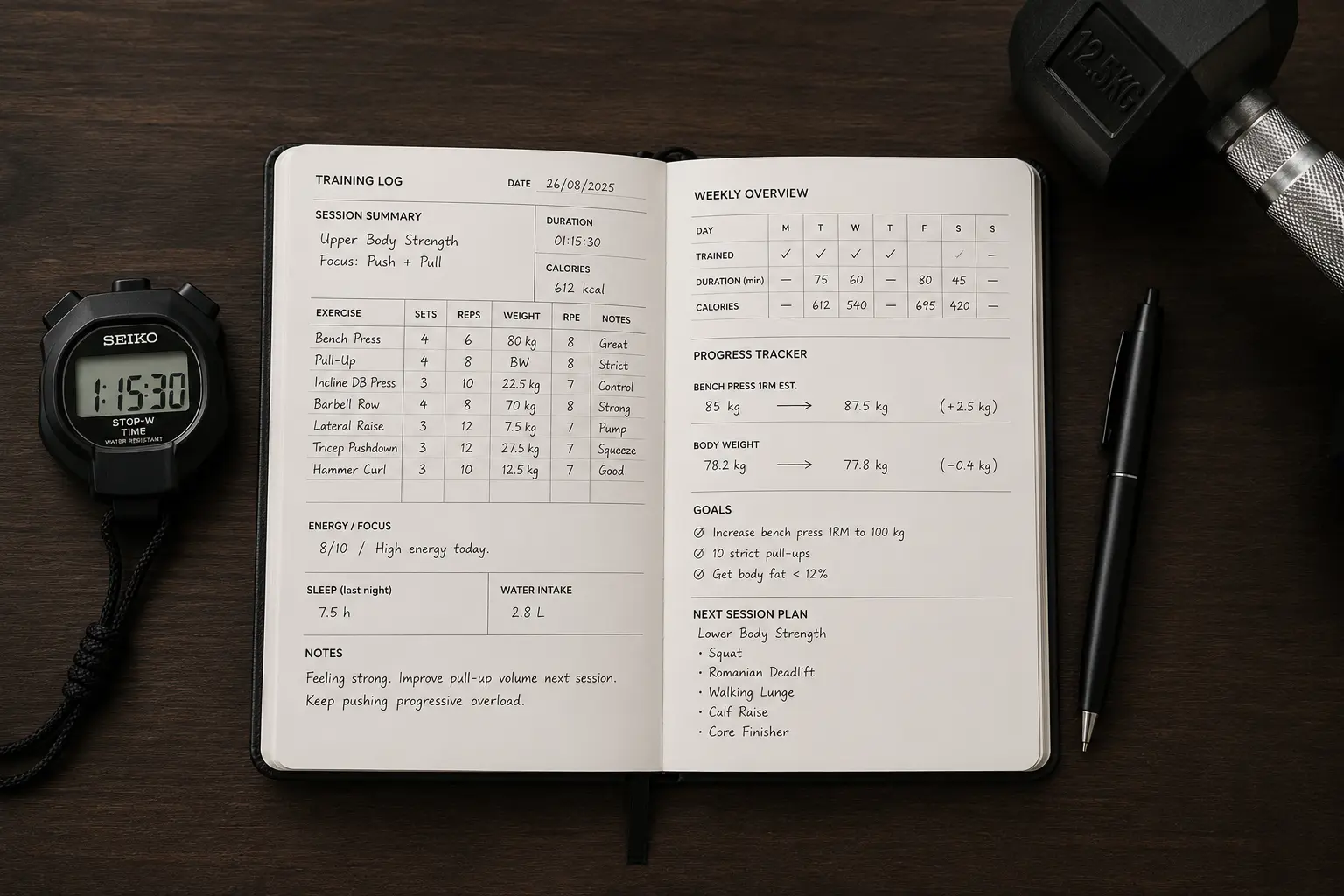
Every single experiment, regardless of what I was actually testing, became clearer the moment I wrote numbers down instead of relying on how a session felt. The isometric test is the clearest example: hold time barely moved between weeks 1 and 3, and if I’d judged progress by feel alone, I would have concluded the method wasn’t working. The effort rating, logged right alongside the time, told a completely different story.
This wasn’t a one-off. The same pattern showed up in the BFR experiment, where reps-to-failure looked like the only meaningful number until the band-free retest confirmed the real carryover, and again in the cardio-order test, where a half-point RPE difference would have been invisible without a side-by-side log.
2. Effort-Based Metrics Caught Changes Weight Alone Missed
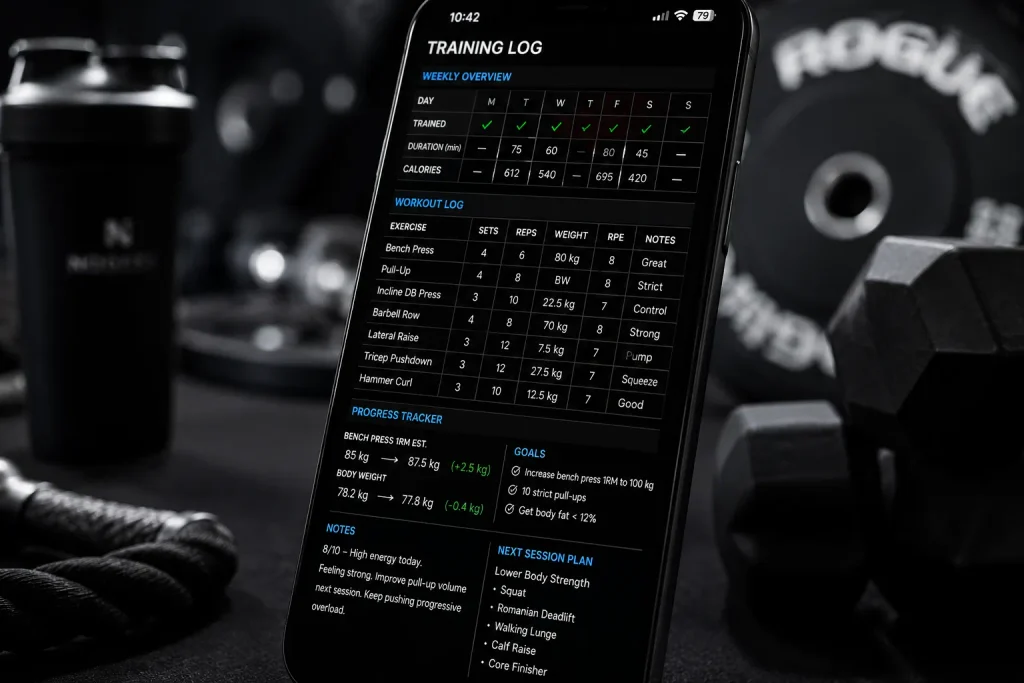
Across the experiments where I could compare a “hard number” (weight, time, reps) against an effort rating (RPE, perceived exertion), the effort number consistently moved first. In the cardio-order experiment, RPE shifted before my actual working weight did. In the isometric experiment, effort dropped from a 9 to a 7 before hold time caught up. In the deload experiment, the RPE swing was the entire signal — nothing about the weight on the bar changed at all until after the deload.
This matches a broader idea this blog keeps circling back to: weight and reps are lagging indicators. Effort is a leading one. By the time a heavier number shows up in your log, the underlying adaptation usually happened days or weeks earlier.
3. Every “Plateau” Was Actually Progress in a Variable I Wasn’t Tracking Yet
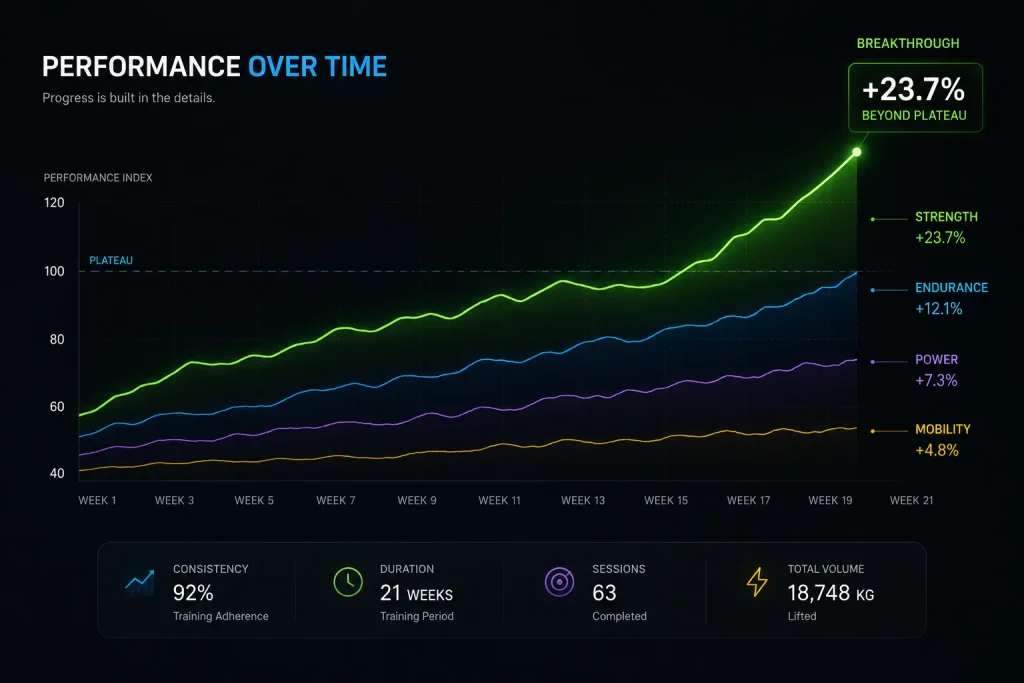
Looking back across all eight experiments, every single time I felt tempted to conclude “this isn’t working,” the actual problem was that I was watching the wrong number. Grip strength’s pinch grip looked stagnant for weeks while dead hang time climbed steadily. Zone 2’s heart rate formula made an already-improving pace look mediocre. BFR’s rep count plateaued right before the band-free test revealed real strength carryover.
None of these were failures of the training methods. They were failures of tracking the wrong single variable and assuming it represented the whole picture.
What I’d Do Differently Next Time
If I were starting these eight experiments over, I’d build in the effort rating from day one instead of adding it partway through, since it consistently turned out to be the earliest signal across almost every method. I’d also commit to a fixed retest interval upfront — 2 to 4 weeks depending on the method — rather than deciding on the fly, since the temptation to test too early or too late was real in more than one experiment.
The other change: run fewer variables per experiment. A few of these tests would have been cleaner with one tracked metric instead of three, since comparing multiple moving pieces at once occasionally made it harder to tell which variable actually explained a given result.
I’d also start treating the retrospective review — the exercise behind this very post — as a built-in step rather than something I only did after six months had already passed. Looking at eight separate logs side by side is what actually revealed the three patterns above; none of them were obvious from inside any single experiment while it was running. A quarterly check-in across whatever self-experiments are active at the time would likely have surfaced these lessons months earlier.
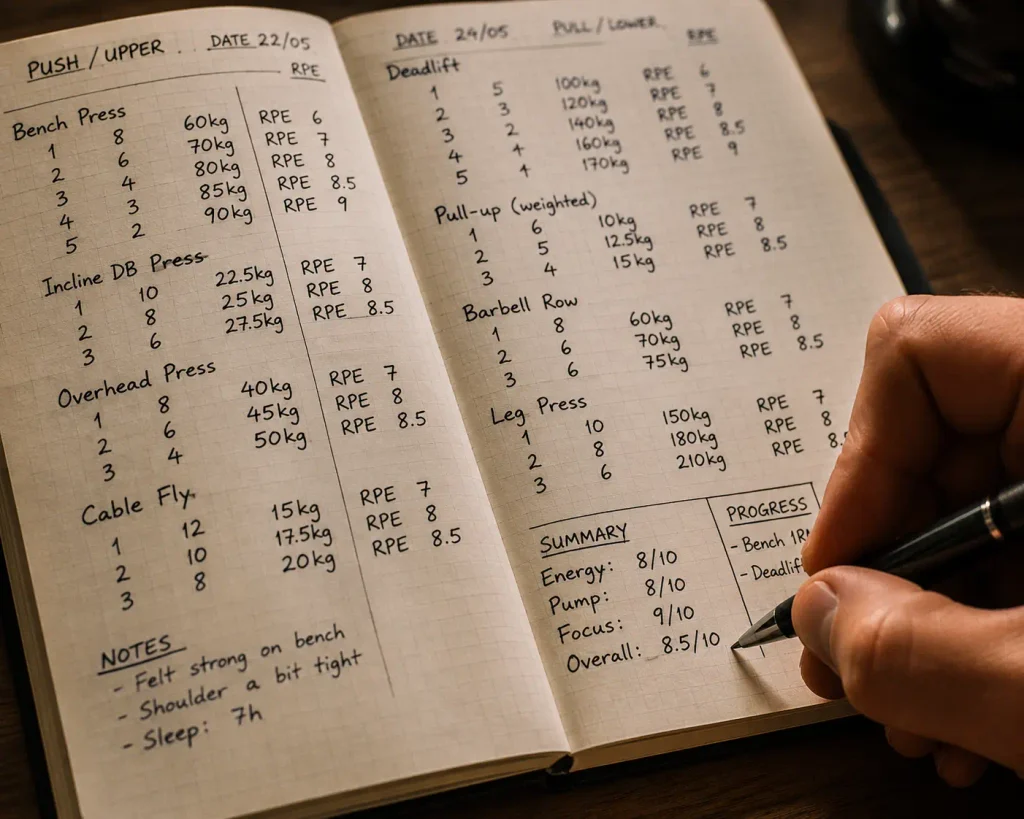
How to Run Your Own Self-Experiment in the Gym
Pick one method and one primary metric. Resist the urge to track everything at once — the clearest results in this whole series came from experiments with a single main number.
Add an effort rating alongside the main metric, even if it feels redundant at first. Across every experiment here, it was the variable that moved first.
Set your retest date before you start, based on how quickly the method plausibly produces change — days for cardio order, weeks for structural changes like grip or hypertrophy.
Keep everything else as stable as possible during the test window, since sleep, stress, and nutrition changes can just as easily explain a shift in your numbers.
Write down the result even if it’s boring or inconclusive. Some of the most useful findings across these eight experiments came from results that looked unremarkable at first glance.
Why Self-Experiments in the Gym Are Worth the Extra Effort
It would have been easier to just follow the general advice from each piece of research and move on — resistance before cardio, deload every six weeks, zone 2 at 60–70% of estimated max heart rate. None of that extra logging was strictly necessary to get a reasonable result.
But “reasonable” and “correct for me specifically” turned out to be two different things more often than expected. The zone 2 formula was off by 10 beats per minute. The isometric plateau at week 3 wasn’t a plateau at all. Running eight small, deliberate self-experiments in the gym instead of just trusting the averages is what caught both of those — and caught them early enough to actually act on, rather than months later after quietly losing motivation.
Frequently Asked Questions About Running Self-Experiments in the Gym
Do I need special equipment to run self-experiments in the gym?
No. Every experiment in this series used a stopwatch, a notebook or simple app, and occasionally a heart rate monitor — nothing that required a lab or specialized gear.
How long should a self-experiment last?
It depends on the method: cardio-related comparisons often show a signal within 2–4 weeks, while structural changes like grip strength or muscle-based adaptations typically need 5–8 weeks to show a clear trend.
Isn’t a self-experiment with one person just anecdotal evidence?
Yes, and it should be treated that way — as a way to find out what’s true for your specific body, not as a replacement for peer-reviewed research. The research tells you what’s likely on average; the self-experiment tells you whether you’re the average case or an exception.
What if my self-experiment doesn’t show any clear result?
An inconclusive result is still useful information — it often means the variable you tracked wasn’t the right one, which is exactly what happened more than once across this series before switching to effort-based tracking solved it.
Should I run multiple self-experiments at the same time?
Generally no. Changing more than one major training variable at once makes it hard to know which change actually caused any result you see, the same reason the cardio-order experiment kept everything else as fixed as possible.
Can self-experiments replace expensive wearables or lab testing?
For most practical training questions, yes — every experiment in this series answered its question with nothing more than a log and consistent measurement, without needing lab equipment or a subscription service.
What’s the single biggest lesson from all 8 self-experiments combined?
That the number you’re watching matters as much as the training method itself. Nearly every apparent plateau across this entire series turned out to be a tracking problem, not a training problem.
You don’t have to, but writing the process down — even privately — forces a level of clarity that just thinking about a training question rarely produces. Several of the patterns in this post only became visible once the eight logs were written out and compared side by side, not while any single experiment was still in progress.
Final Thoughts on Self-Experiments in the Gym
Six months of self-experiments in the gym didn’t just answer eight individual questions — they revealed a pattern bigger than any single method: the training log itself is doing more work than people give it credit for. A slightly better log, with the right variables in it, turned three separate “this isn’t working” moments into three confirmed successes, and it did so using nothing more sophisticated than a notebook, a stopwatch, and the willingness to write down numbers that occasionally looked boring at the time.
Start today: pick one thing you’re currently unsure about in your training, choose a single primary metric plus an effort rating, and set a retest date. That’s the entire method behind every one of these self-experiments in the gym.