Note: This article contains affiliate links. If you make a purchase through them, The Iron Nutrition may receive a small commission at no additional cost to you. We only recommend products that we have tested and trust to help improve our performance.
Table of Contents
Introduction
If you want to transform your body, losing weight isn’t just about eating less — it’s about eating right. While total calories control whether you lose or gain weight, macro counting is what determines whether that weight change comes from fat or from muscle. This guide walks you through exactly what macros are, how to calculate your own numbers, and which tools make tracking them easy.
What Are Macronutrients? The Big Three
Before you can start macro counting, you need to understand what you’re actually counting. “Macros” is short for macronutrients — the three nutrients that make up virtually all of the calories you eat: protein, carbohydrates, and fat.
1. Protein: The Muscle Builder
Protein is arguably the most important macro when it comes to changing your body composition. It supplies the amino acids your body needs to repair and build muscle tissue, especially after a heavy training session. Protein also has the highest thermic effect of food (TEF) of the three macros, meaning your body burns more calories digesting it compared to carbs or fat — and it keeps you feeling full for longer, which makes staying in a calorie deficit much easier.
- Calories: 4 calories per gram
- Best sources: chicken breast, lean beef, turkey, eggs, fish, and whey protein

2. Carbohydrates: Your Training Fuel
Carbohydrates are your body’s preferred fuel source, especially during intense exercise. When you eat carbs, your body breaks them down into glucose, which gets stored in your muscles as glycogen — the fuel that powers hard training sessions and keeps your energy levels high throughout the day. Cutting carbs too aggressively can leave your workouts feeling flat, sluggish, and harder to push through.
- Calories: 4 calories per gram
- Best sources: oats, rice, potatoes, sweet potatoes, whole grain bread, and fruit

3. Fats: The Hormone Regulator
Dietary fat isn’t the enemy, and eating fat doesn’t automatically make you fat. Fats are essential for hormone production (including testosterone), brain health, and absorbing fat-soluble vitamins A, D, E, and K. Keeping healthy fats at an adequate baseline helps keep your metabolism and energy levels stable.
- Calories: 9 calories per gram
- Best sources: avocados, olive oil, nuts, seeds, whole eggs, and fatty fish like salmon
How to Calculate Your Personal Macros
Now that you know what the “Big Three” are, it’s time to calculate your own numbers. Macro counting isn’t a one-size-fits-all formula — your ideal macros depend on your current weight, activity level, and ultimate fitness goal.
Step 1: Find Your TDEE
Before figuring out your macros, you need to know your Total Daily Energy Expenditure (TDEE) — the total number of calories your body burns in a 24-hour period, based on your metabolism and activity level. You can find this quickly using any free online TDEE calculator. For an in-depth clinical look at energy balance, you can review the American Council on Exercise (ACE) Physical Activity Guidelines.
Step 2: Determine Your Goal
Once you know your maintenance calories (your TDEE), adjust them based on what you want to achieve:
- For fat loss (caloric deficit): subtract 300–500 calories from your TDEE. This forces your body to use stored fat for energy while still leaving enough fuel for training.
- For muscle gain (caloric surplus): add 200–300 calories to your TDEE. This provides the extra energy needed to build new lean muscle efficiently.
Step 3: Divide Your Macros
With your daily calorie target locked in, distribute those calories across the three macronutrients. A simple, balanced starting framework many fitness enthusiasts use is the 40/30/30 approach — 40% protein, 30% carbs, 30% fat. It’s not a universal rule, but it’s a reasonable, flexible starting point you can adjust from.
- Protein (about 40% of total calories): prioritize this first. A common rule of thumb is roughly 1 gram of protein per pound of body weight to support muscle recovery.
- Carbohydrates (about 30% of total calories): fuel your training sessions and keep daily energy levels high.
- Fats (about 30% of total calories): fill the remaining calories with healthy fats to support hormone production and overall health.
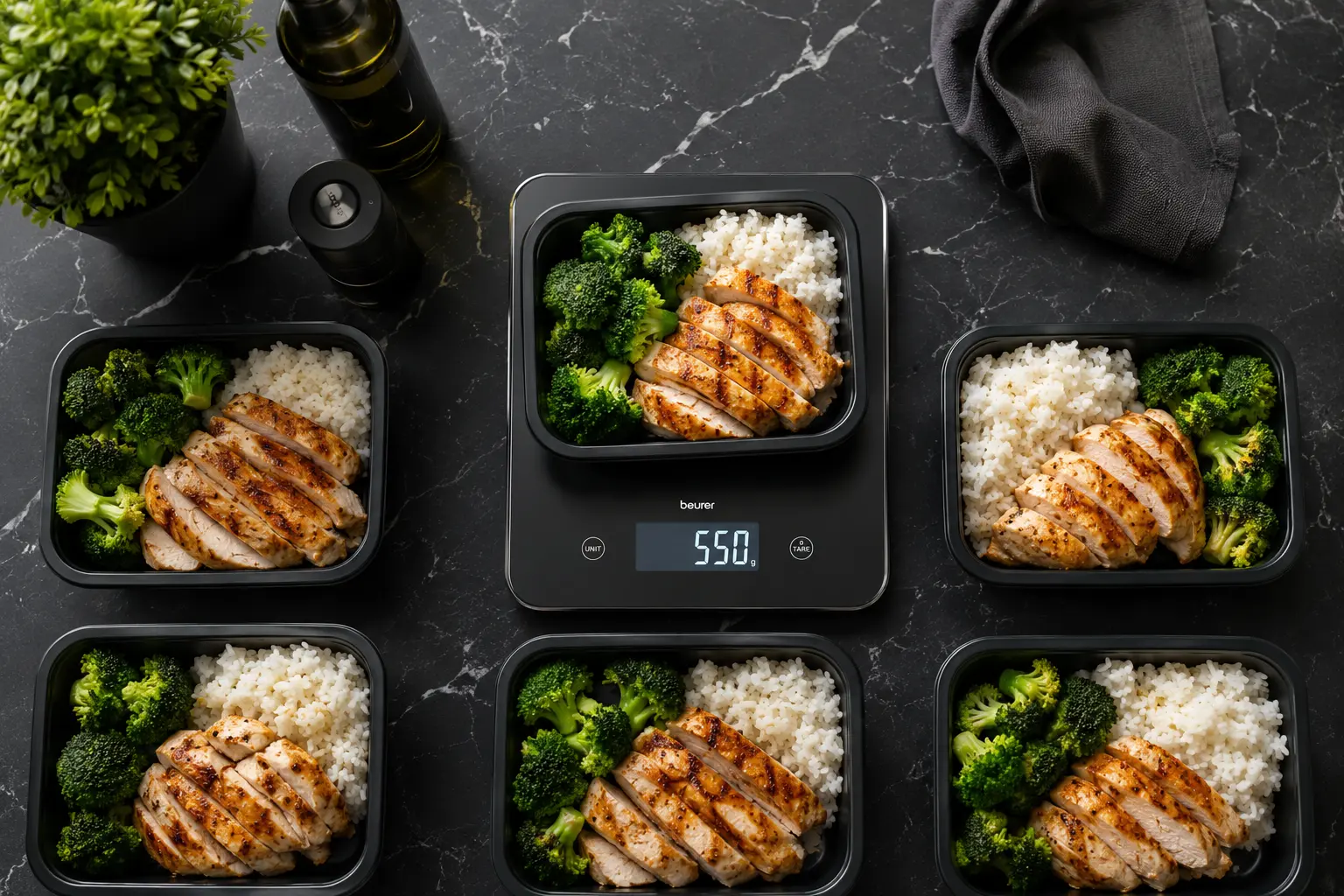
For example, if your protein target lands around 150–165g a day, prepping chicken or another lean protein in advance and logging your meals earlier in the day makes hitting that number far easier by dinnertime. If you need assistance structuring these protein sources, check out our guide on The 10 Best High-Protein Foods: Maximize Muscle & Metabolism.
Tracking Made Simple: Tools for Success
Calculating your numbers is just the first step — the real results come from tracking consistently. You don’t need to do complex math every time you eat. A good food tracking app like MyFitnessPal, Lose It!, or Cronometer does the calculations for you automatically as you log meals.
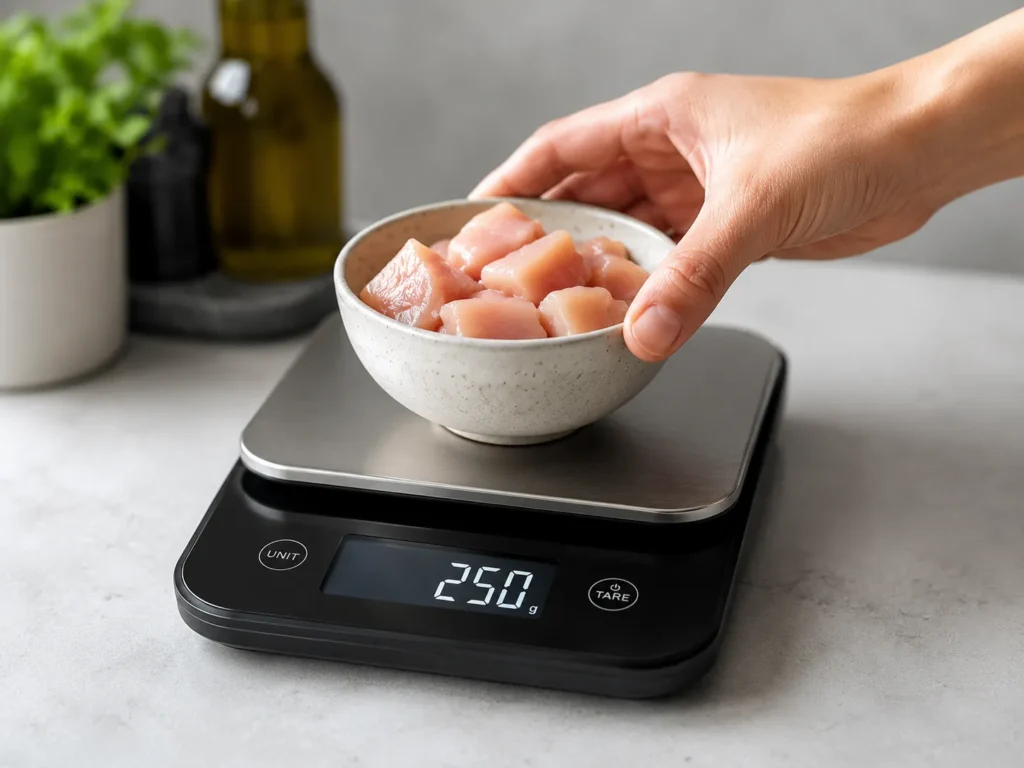
The best practice is to use a digital kitchen scale and weigh your food raw whenever possible. Tracking cooked meals can introduce errors, since cooking changes weight through water loss, while weighing raw ingredients — rice, potatoes, meat — gives you far more accurate numbers.
Essential Tools to Guarantee Your Results
To make macro counting effortless and help you hit your protein targets accurately, here are two tools the fitness community relies on regularly:
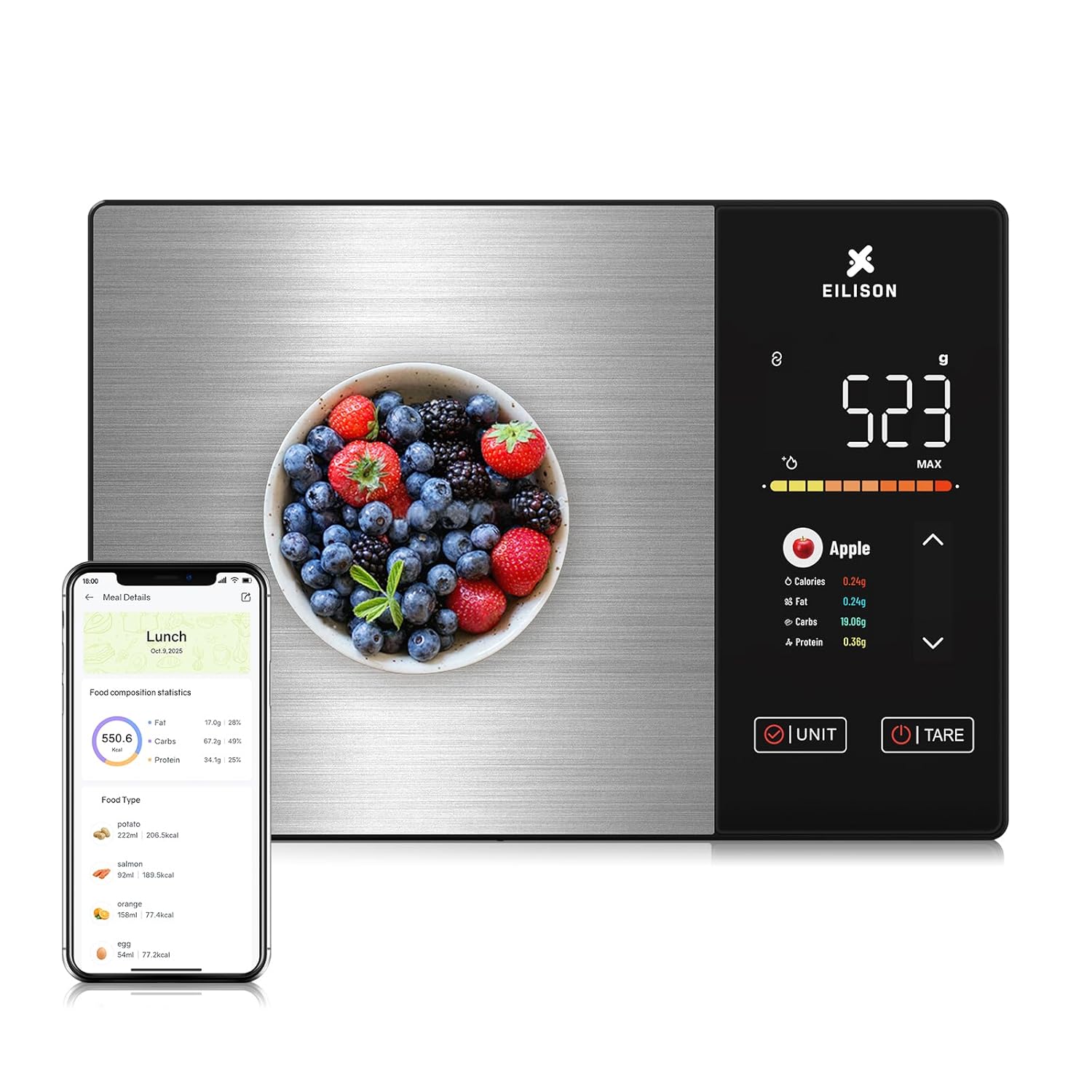
GreaterGoods Digital Kitchen Scale
Getting accurate macros starts with a reliable kitchen scale. This high-precision scale lets you weigh meat, rice, and fats down to the gram, eliminating the guesswork that often stalls fat loss progress.
Pros
- Sleek, easy-to-clean design, and highly accurate readings
- It syncs with smart apps and performs its main function flawlessly
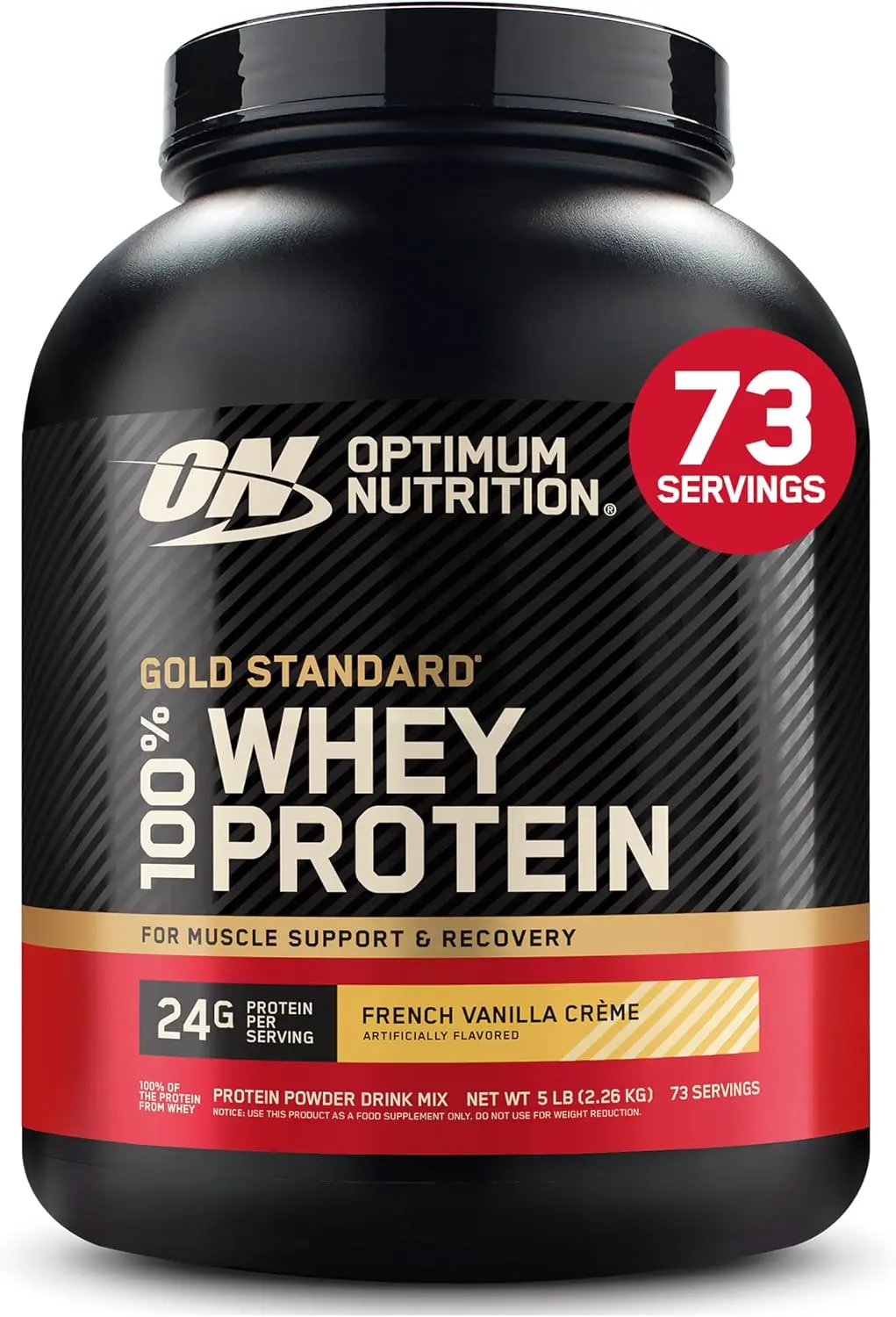
Optimum Nutrition Gold Standard 100% Whey (Vanilla Ice Cream)
Hitting a high protein target like 150–165g a day can be tough through whole foods alone. Gold Standard whey helps bridge that gap, delivering high-quality protein with minimal carbs and fat, so it fits easily into almost any macro budget.
- Pros: 24g of protein per scoop, excellent mixability, versatile for smoothies or oats
- Cons: contains artificial sweeteners (sucralose)
Common Macro Counting Mistakes to Avoid
- Guessing portions instead of weighing them. Even experienced eaters routinely misjudge portion sizes by 20–30%, which adds up fast over a week.
- Only tracking protein and ignoring carbs and fat. Hitting your protein target while wildly overshooting fat or carbs can still stall fat loss or muscle gain.
- Setting your deficit or surplus too aggressively. A 1,000-calorie deficit might sound faster, but it usually leads to muscle loss, low energy, and burnout well before it leads to lasting results.
- Not adjusting macros as your weight changes. Your TDEE shifts as your body weight changes, so macros calculated for your starting weight need periodic recalculation.
- Abandoning tracking after a few “off” days. One inconsistent day doesn’t undo progress — quitting entirely after it does.
How Long Until You See Results?
Most people notice their clothes fitting differently or see measurable changes in 3–4 weeks of consistent macro counting, assuming their calorie target and macros are reasonably accurate. Scale weight can fluctuate daily due to water retention, sodium, and hormones, so it’s worth tracking trends over 1–2 weeks rather than judging any single day.
If 3–4 weeks pass with no meaningful change despite consistent tracking, it’s usually a sign your calorie target needs a small adjustment — not that macro counting itself isn’t working.
Frequently Asked Questions About Macro Counting
Do I need to hit my macros exactly every day?
No. Being within 5–10g of each target is generally close enough to see results. Chasing exact numbers down to the gram usually adds unnecessary stress without meaningfully changing your outcome.
Can I still eat “junk food” while macro counting?
Yes, as long as it fits your daily targets. This flexibility is one of the biggest advantages of macro counting over rigid “clean eating” rules — an occasional treat that fits your macros won’t derail your progress.
How accurate do I need to be with my TDEE calculation?
TDEE calculators are estimates, typically accurate within about 10–15%. Use the number as a starting point, then adjust based on your actual results over 2–3 weeks rather than treating it as a fixed, perfect figure.
Is the 40/30/30 macro split right for everyone?
No. It’s a reasonable general starting point, but athletes, people with certain medical conditions, or those following specific training styles (like endurance sports) often benefit from different ratios, such as higher carbs or higher fat.
Do I need a food scale to count macros successfully?
It’s not strictly required, but it dramatically improves accuracy. Many people start with visual portion estimates and later add a scale once they want to fine-tune results or break through a stall.
What happens if I eat more protein than my target?
Extra protein beyond your target is generally not harmful for healthy individuals and simply gets used for energy or stored, similar to excess carbs or fat, though it will affect your total calorie count.
How long should I macro count before switching to intuitive eating?
Most people benefit from at least 8–12 weeks of consistent tracking to build a genuine sense of portion sizes and food composition before transitioning to a more intuitive approach.
Final Thoughts on Macro Counting
Macro counting isn’t about restriction — it’s about freedom. It gives you the flexibility to enjoy foods you love while making sure your body gets exactly what it needs to build muscle, burn fat, and perform at its best. Calculate your baseline, track consistently for a few weeks, and adjust your numbers based on how your body actually responds.
Start today: calculate your TDEE, set your first macro targets using the 40/30/30 framework, and log your very next meal. That’s macro counting in action — and within a few weeks of consistent tracking, you’ll have a far clearer picture of exactly how your body responds to food than any generic diet plan could ever give you.adjust your numbers based on how your body responds. Welcome to the iron lifestyle!
Finally, a guide that actually makes sense! I’ve been struggling with macro tracking for months and always found the math too complicated. The tip about weighing food raw is a game changer. Thanks for keeping it simple!