Note: This article contains affiliate links. If you make a purchase through these links, The Iron Nutrition may receive a small commission at no additional cost to you. We only recommend products that we’ve tested and trust to help improve our performance.
Table of Contents
Introduction
Do you have trouble keeping your energy up until the final whistle? Whether you’re heading to the gym or a soccer match, what you eat in the hours leading up to the activity makes all the difference. Pre-workout nutrition is the fuel that keeps you from running out of energy halfway through your session — and getting it right is simpler than most people think, once you understand the handful of principles that actually matter.
The Importance of Pre-Workout Nutrition Timing
Consistency is key when it comes to pre-workout nutrition. Aim for a balanced meal 2–3 hours before your activity. This window allows your body to digest food efficiently, ensuring glucose is readily available for your muscles by the time you start moving — without the sluggish, heavy feeling that comes from training on a meal that’s still sitting in your stomach, or the light-headed, low-energy feeling that comes from training on empty.
If you’re closer to the 1-hour mark before training, a smaller, faster-digesting snack works better than a full meal, since there simply isn’t enough time for a large meal to be properly digested.
Strategic Carbohydrate Nutrition
Carbohydrates are your primary fuel source for high-intensity movement, whether that’s a heavy lifting session or 90 minutes of running on a soccer pitch. However, not all carbs are created equal for pre-workout nutrition. Focus on complex carbohydrates that provide sustained energy, rather than the rapid, unsustainable sugar spikes and crashes associated with simple sugars.
Top Pre-Workout Carb Examples
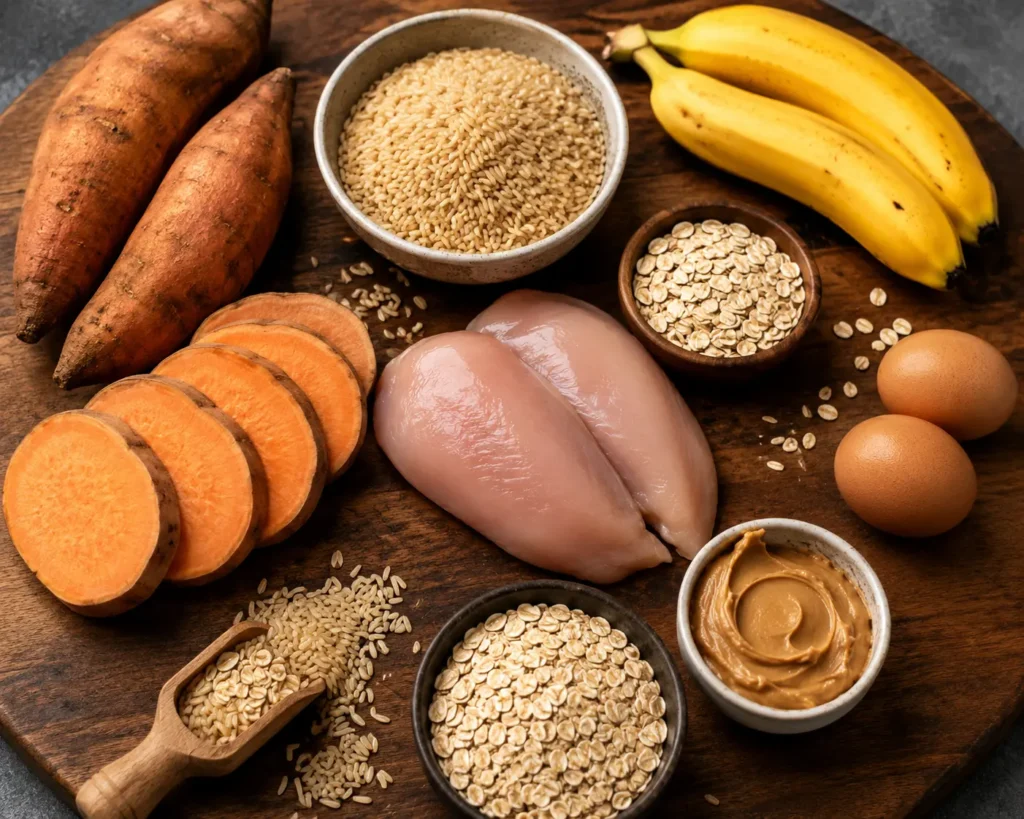
- Oats: Excellent for slow-digesting, sustained energy over a long session.
- Sweet potatoes: A perfect complex carb, and easy to prepare quickly in an air fryer.
- Brown rice or quinoa: Great choices for a balanced meal eaten 2–3 hours before starting.
- Banana: A solid option for a quick energy boost if you’re closer to the 1-hour window before your session.
Practical Tips for Pre-Workout Meals
Cooking for Efficiency
Using healthy, consistent cooking methods like air-frying lets you prepare nutrient-dense pre-workout meals quickly while maintaining strict portion control — useful if you’re also tracking macros alongside your pre-workout nutrition plan.
Keep Fiber Moderate Right Before Training
Right before a match or a heavy session, keep fiber intake moderate rather than loading up on high-fiber foods. Too much fiber close to activity can lead to digestive discomfort during intense running or lifting, which is the opposite of what good pre-workout nutrition should achieve.
The Power of Consistency
Solid pre-workout nutrition doesn’t work in isolation — it’s most effective as part of a broader routine built on consistent macronutrient control. Whether it’s post-workout recovery or pre-workout preparation, maintaining a controlled diet is essential for performance over the long run, not just for a single session.
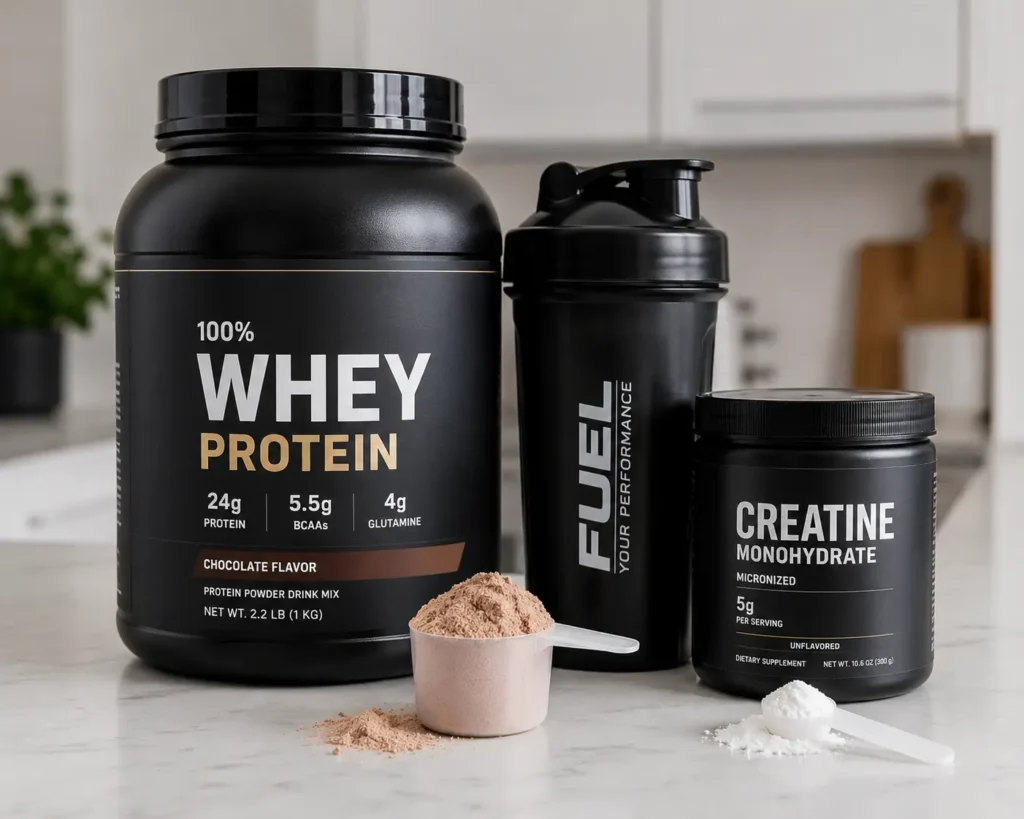
Many athletes, including plenty who track their macros closely, also use high-purity whey protein and creatine to support muscle recovery and strength alongside solid pre-workout nutrition. If you’re looking for reliable options, these are two we’d recommend:
- Optimum Nutrition Gold Standard 100% Whey Protein Powder
- Optimum Nutrition Micronized Creatine Monohydrate Powder
Common Pre-Workout Nutrition Mistakes
- Eating a heavy, high-fat meal too close to training. Fat slows digestion significantly, which can leave you feeling sluggish or even nauseous mid-session.
- Skipping food entirely before a long or intense session. Training in a fasted state can work for short, low-intensity workouts, but it usually hurts performance during longer or higher-intensity sessions.
- Overloading on fiber right before activity. As mentioned above, this is one of the most common causes of mid-session stomach discomfort.
- Relying only on simple sugars for energy. A quick sugar spike might feel good for 10 minutes, but the crash that follows can leave you flat for the rest of your session.
- Not testing your pre-workout meal in advance. What works well before a gym session might not sit well before a match with running involved — experiment during practice, not on match day, so you’re never guessing under real pressure.
Pre-Workout vs. Post-Workout Nutrition: What’s the Difference?
Pre-workout nutrition is primarily about fueling — giving your body enough available glucose and easily digestible energy to perform at its best during the session itself. Post-workout nutrition, by contrast, is primarily about recovery — replenishing glycogen stores and supplying protein to support muscle repair after the session ends.
Both matter, but they serve different purposes: getting pre-workout nutrition right helps you perform better during training, while getting post-workout nutrition right helps you recover and adapt after it. Neglecting either one tends to show up as either poor performance in the moment or slower progress over time.
Sample Pre-Workout Meals by Timeframe
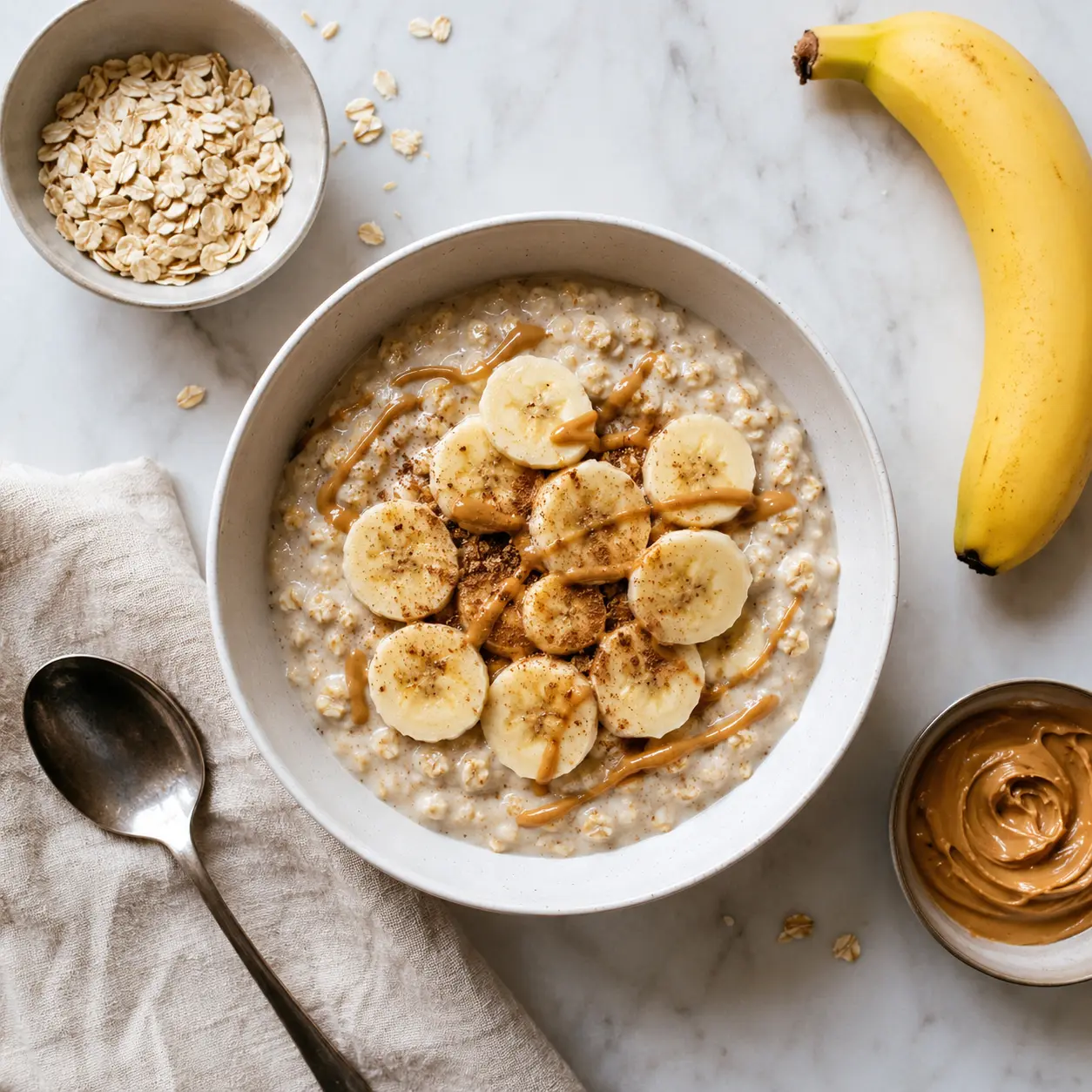
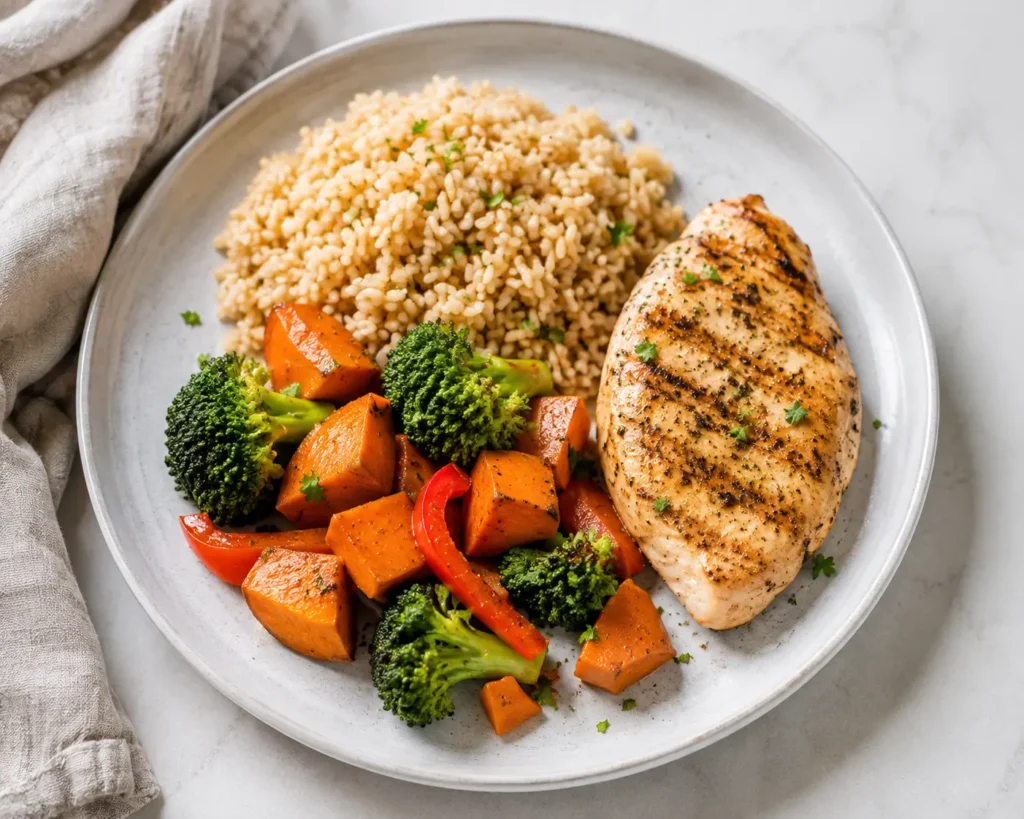
Putting all of this together is easier with a few concrete examples. If you have 2–3 hours before training, a bowl of oats with a banana and a scoop of whey protein, or brown rice with grilled chicken and vegetables, both hit the mark: enough complex carbs for sustained energy, moderate protein, and manageable fiber. If you’re down to 1 hour, something lighter works better — a slice of toast with honey, or a small bowl of rice with a little fruit.
Inside the 30-minute window, keep it minimal: half a banana, a few dates, or a small glass of fruit juice are enough to top off blood sugar without sitting heavy in your stomach once you start moving. The general pattern across all three timeframes is the same — the closer you get to training, the smaller and simpler the meal should become, shifting from complex carbs and moderate protein toward small amounts of fast-digesting sugar.
Hydration: The Often-Forgotten Half of Pre-Workout Nutrition
Food gets most of the attention in pre-workout nutrition discussions, but hydration status has just as much impact on performance. Even mild dehydration — as little as 2% of body weight lost through sweat — can measurably reduce strength, endurance, and focus, making a well-planned meal far less effective than it should be.
Aim to drink water steadily throughout the day rather than trying to “catch up” with a large amount right before training. For sessions longer than 60–90 minutes, especially in hot conditions like an outdoor match, adding electrolytes (sodium, potassium, magnesium) can help maintain performance better than plain water alone, since sweat carries these out of your system along with fluid. A simple pinch of salt in your water or an electrolyte tablet is usually enough for most recreational athletes — you don’t need an elaborate sports science protocol to cover the basics.
Frequently Asked Questions About Pre-Workout Nutrition
What should I eat 2–3 hours before a workout?
A balanced meal with complex carbohydrates (like oats, brown rice, or sweet potatoes), a moderate amount of protein, and low-to-moderate fat and fiber works well for most people in this timeframe.
What if I only have 30 minutes before training?
Stick to something small and fast-digesting, like a banana or a small amount of fruit juice. A full meal this close to training usually causes discomfort rather than providing usable energy.
Is it bad to train on an empty stomach?
For short, low-intensity sessions, fasted training is generally fine for most people. For longer or higher-intensity sessions, eating beforehand typically supports better performance and helps you avoid an energy crash partway through — the exact point where technique tends to break down and injury risk climbs.
Do I need supplements for good pre-workout nutrition?
No. Whole-food carbohydrates and a balanced meal are the foundation of solid pre-workout nutrition. Supplements like whey protein and creatine can support overall training goals, but they’re not required to fuel a single session effectively.
How does pre-workout nutrition differ for gym sessions versus sports like soccer?
The core principles are similar, but longer, running-intensive sports like soccer generally benefit from slightly more emphasis on sustained carbohydrate availability, since the activity duration and intensity fluctuate more than a typical structured gym session — sprinting, jogging, and standing all demand different amounts of energy within the same match.
Can I use simple sugars before a workout?
In small amounts very close to training — within 15–30 minutes — simple sugars like a banana or a small amount of honey can provide a quick energy boost. As a primary fuel source 2–3 hours out, though, complex carbohydrates are generally the better choice, since they release glucose more gradually and won’t leave you facing an energy crash mid-session.
How much should I drink before training?
Proper hydration matters just as much as food. Aim to drink water steadily in the hours leading up to training rather than large amounts right before starting, which can cause the same discomfort as eating too close to activity. As a rough guide, sipping 400–600ml in the 2–3 hours before a session, then a small amount closer to start time, works well for most people without leaving you feeling waterlogged.
Final Thoughts on Pre-Workout Nutrition
Nutrition isn’t a one-size-fits-all formula, but starting with the basics — timing your meal 2–3 hours out, prioritizing complex carbs, and keeping fiber moderate right before activity — will transform your performance far more than any supplement ever could. Track how you feel across a few sessions using different pre-workout meals, and you’ll quickly find the specific timing and food combination that works best for your body.
Before you head to the kitchen to prepare your next meal, don’t forget that consistent protein intake is just as crucial as your pre-workout meal. If you haven’t read our previous guide, check out The 10 Best High-Protein Foods: Maximize Muscle & Metabolism to make sure your recovery is just as optimized as your performance.
What’s your favorite pre-workout meal? Let us know in the comments below!