
Quick answer: Rucking for lifters means walking with a weighted backpack to build cardiovascular fitness without the muscle-interference effect that running can cause. Most lifters start with 5–10% of body weight and track pack weight, distance, and pace the same way they’d track any other lift.
If you lift weights, you’ve probably avoided cardio for one simple reason: you don’t want to lose your gains. Running for 30 minutes can feel like it’s undoing a week of hard training. That fear isn’t entirely unfounded, either — but it’s also why rucking has become the go-to cardio option for lifters specifically, and it’s worth understanding exactly why before you write off cardio altogether.
Table of Contents
What Is Rucking for Lifters, and Why Does It Work?
Rucking is walking at a steady pace while carrying extra weight, usually in a backpack or weighted vest. Rucking for lifters specifically has become popular because it builds cardiovascular fitness and burns calories without the high-impact, muscle-interference effect that running can cause.
Running relies heavily on fast-twitch muscle recovery and creates a training signal that can conflict with strength and hypertrophy work — commonly called the “interference effect.” Rucking, by contrast, is low-impact and slow-paced enough that it doesn’t compete with your lifting for recovery resources the same way.
There’s a second reason lifters like rucking: it directly reinforces skills they already train. Carrying weight for time or distance uses the same posture, core bracing, and grip demands as a heavy farmer’s carry — just spread across a much longer duration.
How Much Weight Should Rucking for Lifters Involve?
Most lifters should start rucking with 5–10% of their body weight and progress toward 15–20% as fitness improves. Lifters with a strength training background can often handle the higher end of this range sooner than complete beginners, since their trunk and grip are already conditioned.
| Experience Level | Recommended Load |
|---|---|
| Complete beginner | 5–10% of body weight |
| Recreational lifter | 10–15% of body weight |
| Experienced lifter | 15–25% of body weight |
Progress the load gradually — increasing by no more than about 10% per week — rather than jumping straight to a heavy pack. Rucking puts new demands on your joints and connective tissue that your gym training doesn’t fully prepare you for, even if you’re already strong.
How to Start Rucking for Lifters
Getting started with rucking for lifters takes almost no equipment and can be done from your very next walk, which makes it one of the easiest cardio methods to actually stick with long term.
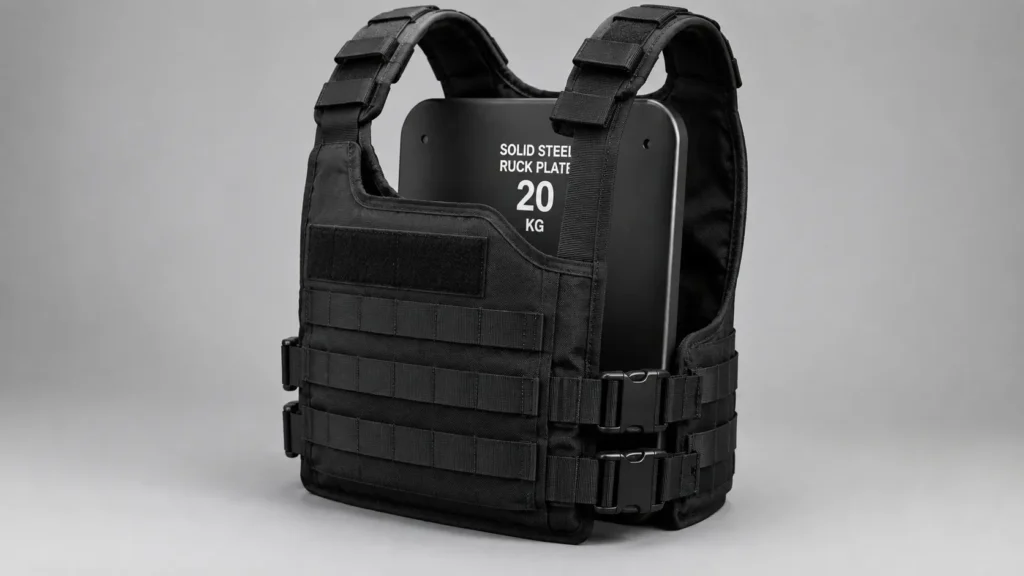
Pick your load. Start at 5–10% of your body weight using a weighted vest, ruck plate, or even books wrapped in a towel inside a sturdy backpack.
Keep the weight high and close to your back. A load that sits low or shifts around strains your lower back and shoulders unnecessarily.
Walk at a steady, conversational pace. You should be able to speak in full sentences — if you can’t, the pace or load is too aggressive for a cardio session.
Start with 20–30 minutes. Build duration before adding more weight, following the same “one variable at a time” principle used in progressive overload.
Cool down and check your posture. If your torso leaned forward or your shoulders rounded during the walk, reduce the load next session.

How to Track Rucking for Lifters
Track rucking the same way you’d track any other lift in your training log: record the load, the distance or time, and the date, then review your trend every 2–3 weeks. Consistency in tracking is what turns “going for a walk” into measurable progress.
A simple rucking log might include:
- Pack weight: in kg or lbs, updated only when you progress
- Distance or duration: whichever you’re prioritizing that session
- Pace: helps you spot whether you’re getting faster at the same load
- Perceived effort: a simple 1–10 scale to catch overreaching early
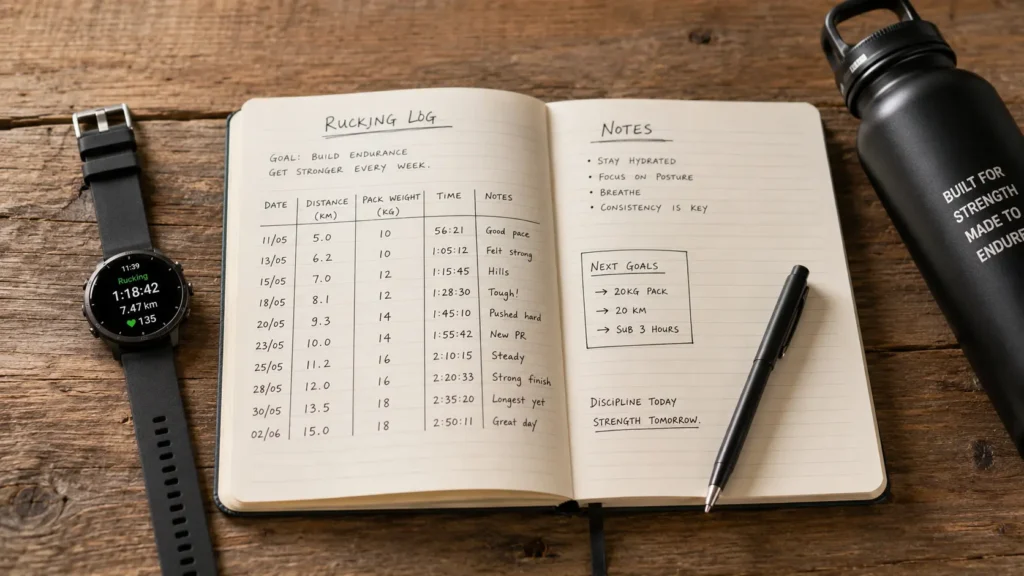
This is the exact same gym performance tracking approach used for your main lifts, applied to a completely different kind of session.
Rucking vs. Running: Why Lifters Prefer It
Rucking preserves muscle mass and recovery capacity better than running does, because it’s lower-impact and doesn’t rely on the same fast, ballistic muscle contractions that running requires. For lifters specifically, this matters more than the raw calorie burn, since preserving recovery capacity directly protects the progress you’re making on your main lifts.
Running is still a valid form of cardio, and it burns more calories per minute at a similar perceived effort. But for someone whose primary goal is strength or muscle growth, rucking offers a way to build a cardio base without competing as directly for the same recovery resources your lifting depends on.
Common Mistakes in Rucking for Lifters
A few avoidable habits show up again and again in rucking for lifters, and catching them early saves you weeks of unnecessary soreness or setbacks.
- Loading the pack too heavy, too soon. Lifting weights in the gym doesn’t fully prepare your joints for carrying weight over distance — start conservatively even if you’re strong.
- Letting the pack sit low on the back. This pulls your shoulders back and strains your lower back over time; keep the load high and tight.
- Rucking every single day. Like any other training stimulus, rucking needs 24–48 hours of recovery between sessions, especially at higher loads.
- Ignoring footwear. Regular training shoes often lack the support needed for longer, weighted walks — supportive walking or trail shoes reduce injury risk.
- Treating it as a race. Rucking’s benefit comes from steady, sustained effort, not pushing pace to the point where form breaks down.
How Often Should Rucking for Lifters Happen?
Two to three rucking sessions per week, on non-heavy-leg-day schedules, works well for most lifters without interfering with strength progress. This frequency provides a solid cardio base while leaving enough recovery capacity for your primary lifting sessions.
If you’re rucking primarily for general health rather than event preparation, even one or two sessions a week — combined with regular walking — provides meaningful cardiovascular benefit without adding significant fatigue to your training week.
Rucking Gear for Lifters: What You Actually Need to Start
You don’t need specialized gear to start rucking for lifters, but a few upgrades make longer sessions noticeably more comfortable once you’re past the first few weeks. A sturdy backpack with a padded hip belt distributes weight better than a standard gym bag, which tends to concentrate load entirely on your shoulders.
Dedicated ruck plates are flat and sit close to your back, unlike loose dumbbells or books that can shift and create pressure points during a long walk. They’re a worthwhile purchase once you’re rucking regularly, but not something you need on day one — a towel-wrapped set of books works perfectly well for your first month of training.
Frequently Asked Questions About Rucking for Lifters
How much weight should a beginner lifter use for rucking?
Start with 5–10% of your body weight, even if you’re already strong from lifting. Your joints and connective tissue need time to adapt to carrying weight over distance, which is different from lifting weight in the gym.
Will rucking interfere with my strength gains?
Generally, no — rucking is low enough impact that it typically doesn’t create the same interference effect as running. Most lifters can ruck 2–3 times per week without it noticeably affecting their strength progress, provided they still get adequate sleep and food to recover from both types of training.
Can I ruck on the same day as leg day?
It’s better to avoid heavy rucking directly after a hard leg session, since both demand recovery from your lower body. Scheduling rucks on upper-body or rest days usually works better.
What’s the difference between a weighted vest and a rucksack for rucking?
A weighted vest keeps the load centered on your torso but usually limits how heavy you can comfortably go. A rucksack can hold more weight but requires proper packing to keep the load high and stable on your back, which matters more the longer or heavier your sessions become.
How long should a beginner rucking session last?
Start with 20–30 minutes at a light load, then build duration before adding more weight, following the same gradual progression used in any other training program.
Do I need special shoes for rucking?
Not strictly, but supportive walking or trail shoes with a firm midsole improve stability and reduce injury risk compared to regular running shoes, especially on uneven terrain.
Can rucking help with grip strength too?
Yes, particularly if you carry the load with handles rather than a pack, similar to an extended farmer’s carry. It builds a complementary type of grip endurance alongside dedicated grip strength training.
Is rucking better than the stairmaster or incline treadmill walking for lifters?
Rucking and incline treadmill walking are fairly similar in terms of interference with strength training, since both are low-impact, steady-paced activities. Rucking has the added benefit of training your posture, core bracing, and grip under load, which incline walking without weight doesn’t provide.
Final Thoughts on Rucking for Lifters
Rucking gives lifters a genuine way to build cardio fitness without sacrificing the strength and muscle they’ve worked hard to build. Start light, track your load and distance the same way you track your main lifts, and increase gradually over weeks rather than sessions.
Start today: grab a backpack, add roughly 5–10% of your body weight, and walk for 20 minutes at a conversational pace. Write down the weight and the time — that’s session one of your rucking log, and the number you’ll compare against two weeks from now.weeks from now.