
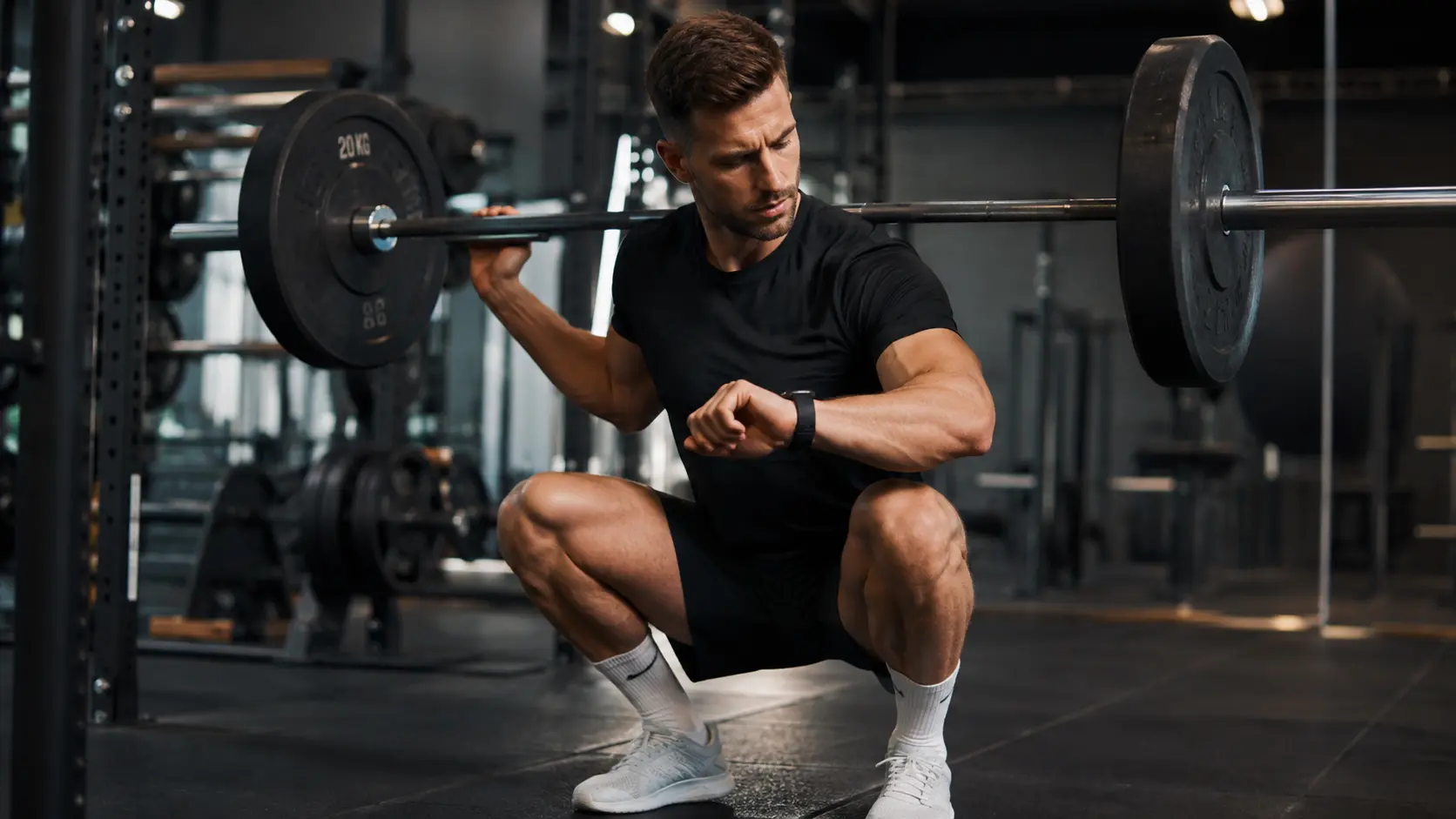
Quick answer: So, are smartwatches accurate for weightlifting? Moderately — they correctly identify the exercise about 88% of the time and count reps reliably for squats and deadlifts, but poorly for bench press. Treat smartwatch data as a helpful estimate to review and correct, not a fully automated replacement for your workout log.
You glance at your wrist after a set of squats and see “12 reps” logged. You’re fairly sure you did 10. Is your smartwatch wrong, or are you misremembering? This happens constantly in gyms, and most people never actually find out the answer — they just shrug it off and keep training. It’s the exact question I kept asking myself for weeks before I finally sat down and tested it properly: are smartwatches accurate for weightlifting, or just good marketing dressed up as data?
We looked into what the research and real-world testing actually show — not marketing claims — so you know exactly when to trust your smartwatch and when to double-check it yourself.
Table of Contents
How Smartwatches Actually Track Weightlifting
Understanding how the tracking actually works is the first step to answering are smartwatches accurate for weightlifting for your own routine, rather than just trusting or dismissing the number on your wrist.
Smartwatches track weightlifting using an accelerometer and gyroscope that detect the motion pattern of your wrist during each rep, then match that pattern against a library of known exercises. This is fundamentally different from how they track running, which relies more heavily on consistent, repetitive motion and GPS.
Because strength exercises vary enormously in bar path, tempo, and wrist position, this pattern-matching approach works better for some lifts than others. A squat or deadlift produces a large, consistent wrist movement that’s relatively easy to detect. A bench press, by contrast, involves a much smaller and more variable wrist motion, which is harder for the sensor to distinguish from noise, especially at the top and bottom of the movement where the wrist barely travels at all.
Are Smartwatches Accurate for Weightlifting?
A peer-reviewed study testing a smartwatch-based tracking app on barbell deadlifts, squats, and bench press found the correct exercise was identified in about 88% of sets, with reliable rep counting for squats and deadlifts but poor accuracy for bench press. One-rep-max prediction based on the watch’s data was successful in fewer than 1 in 10 attempts.
Real-world testing from fitness reviewers tells a similar story: rep-counting accuracy across different smartwatches and apps ranges roughly from 70% to 94%, depending on the device, the app, and the specific exercise being performed. That’s a wide enough range that “how accurate is my smartwatch” genuinely depends on what you’re using it for, and on which specific model and app combination you’ve chosen.
Which Exercises Smartwatches Track Best (and Worst)
This is really the core of the are smartwatches accurate for weightlifting question, since accuracy isn’t a single number — it changes dramatically depending on the exercise itself.
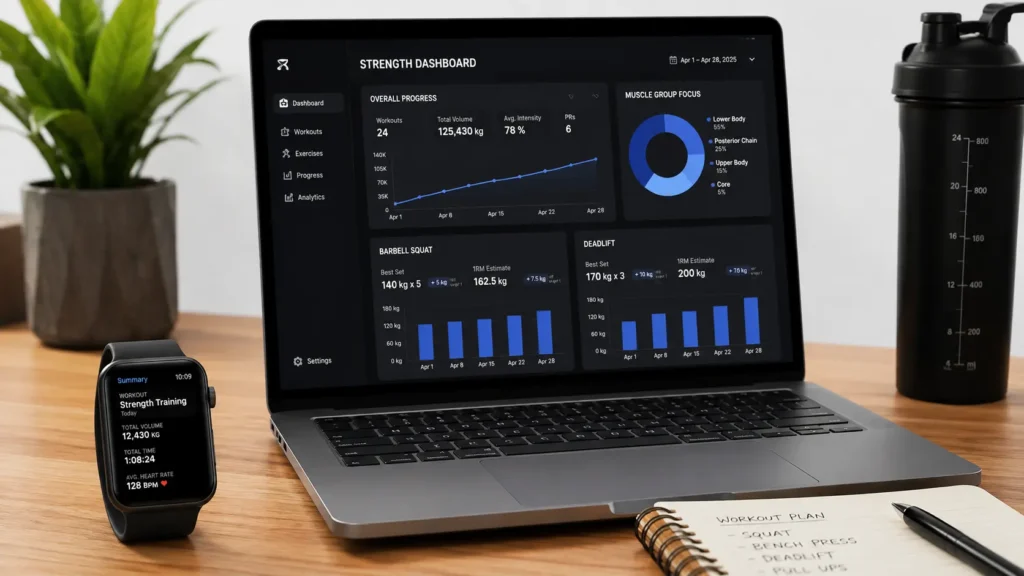
Smartwatches track exercises with large, consistent wrist movement — like squats, deadlifts, and rows — noticeably better than exercises with small or highly variable wrist motion, like bench press or complex compound lifts such as Romanian deadlifts.
| Exercise Type | Typical Tracking Accuracy | Why |
|---|---|---|
| Squat | High | Large, consistent wrist path throughout the rep |
| Deadlift | High | Clear, repeatable start and end position |
| Rows | Moderate-high | Consistent pattern, but grip and angle vary |
| Bench press | Low | Small wrist movement, easily confused with noise |
| Romanian deadlift | Low | Motion pattern overlaps with other hip-hinge movements |
If your training log relies heavily on bench press data specifically, treat your smartwatch’s automatic count as a rough estimate you’ll likely need to correct by hand, at least until sensor technology and detection algorithms improve further for smaller-range movements.
My Own Test: Are Smartwatches Accurate for Weightlifting in Real Training?
I wanted a real answer to “are smartwatches accurate for weightlifting,” not just a summary of someone else’s data, so I wore both a Garmin and an Apple Watch (with a popular third-party strength app) through four weeks of my own training and logged every set by hand alongside what each device recorded.
The pattern matched the research almost exactly. On squats and deadlifts, both watches were consistently within 1 rep of my actual count — close enough that I stopped bothering to manually verify those lifts after the second week. Bench press was a different story. On a set of 8 strict reps, the Garmin once logged 11, and the Apple Watch app skipped counting two reps entirely on a slow, controlled set, then overcounted the next set by 3 when I sped up my tempo slightly.
What surprised me more than the rep-counting gaps was the heart rate data during heavy grip work. Deadlifts and farmer’s carries repeatedly showed heart rate “spikes” that lined up suspiciously well with when I gripped the bar hardest, not with actual cardiovascular effort — a clear sign of the optical sensor getting disrupted, exactly as the research predicts. Switching to a chest strap for a week fixed this completely, and honestly, that one change made a bigger difference to data quality than switching devices ever did.
My personal takeaway: I still wear my watch every session, but I no longer trust it blindly. I treat the rep count as a placeholder I glance at, not a number I record as fact — and that single mindset shift is really the entire point of this guide.
Smartwatch vs. Manual Logging: Which Should You Trust?
This comparison is really where the are smartwatches accurate for weightlifting question gets practical, since the honest answer changes depending on which specific number you’re looking at.
For rep and set counts, manual logging is generally more reliable than automatic smartwatch tracking, especially for exercises like bench press where sensor accuracy drops significantly. For heart rate, recovery metrics, and overall training load, a smartwatch — especially paired with a chest strap — typically outperforms manual estimation.
The most reliable approach combines both: let your smartwatch handle continuous metrics like heart rate and workout duration automatically, while you manually confirm or correct rep and set counts for exercises known to have lower tracking accuracy, like bench press.
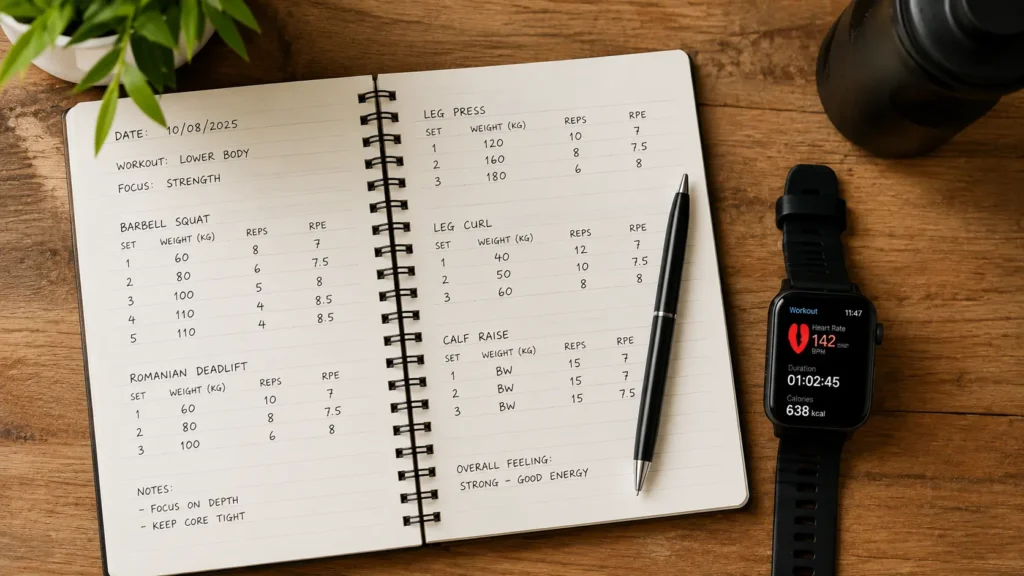
This mirrors the same principle behind gym performance tracking in general — the tool matters far less than the consistency and accuracy of what actually gets recorded.
How to Get More Accurate Data From Your Smartwatch
Once you’ve accepted that the honest answer to “are smartwatches accurate for weightlifting” is “yes, with conditions,” these five habits close most of the remaining gap between what your watch records and what actually happened.
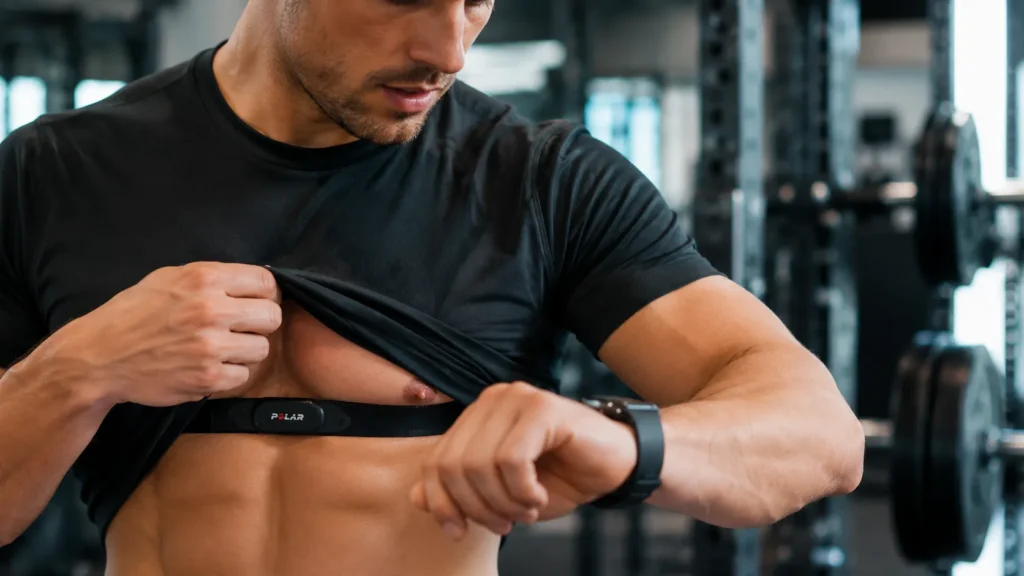
- Use a chest strap for heart rate during heavy lifting. Gripping a barbell tightens your wrist and can disrupt the watch’s optical heart rate sensor, and a chest strap avoids this issue entirely.
- Manually select your exercise before starting, if your app allows it. Automatic exercise recognition is good but not perfect; telling the app what you’re doing removes one layer of guesswork.
- Double-check rep counts on exercises with small wrist movement. Bench press, overhead press, and similar lifts benefit most from a quick manual correction after each set.
- Keep the watch snug but not overly tight. A loose watch face moves independently of your wrist, adding noise to the accelerometer data the app relies on.
- Update your app and watch software regularly. Rep-counting algorithms improve over time, and outdated software often uses an older, less accurate detection model.
Common Mistakes When Relying on Smartwatch Data
These mistakes are the biggest reason people misjudge whether smartwatches are accurate for weightlifting based on one bad experience, instead of understanding the actual pattern behind the errors.
- Trusting automatic rep counts without ever spot-checking them. Even a quick weekly comparison between your watch’s count and your actual memory catches drift before it distorts your training log.
- Assuming all exercises are tracked equally well. As the table above shows, accuracy varies significantly by movement pattern, not just by device.
- Ignoring the difference between exercise recognition and rep counting. A watch correctly identifying “you did a squat” doesn’t guarantee it counted the reps correctly within that set.
- Chasing 1RM predictions from wrist-based data. Current smartwatch-based 1RM estimates are unreliable enough that they shouldn’t replace an actual tested or calculated max.
- Switching devices mid-program and assuming continuity. Different watches and apps use different algorithms, so a sudden jump or drop in tracked numbers may reflect a device change, not real performance change.
Why This Data Matters More Than the Marketing
Manufacturers naturally emphasize the exercises and scenarios where their devices perform best, which is exactly why independent, peer-reviewed testing matters so much when you’re trying to answer “are smartwatches accurate for weightlifting” honestly. A product page showing a smiling person mid-deadlift doesn’t tell you that the same watch might miscount your bench press reps by 20% or more.
This isn’t a reason to distrust wearables entirely. It’s a reason to use them the way any good tool should be used: understanding both its strengths and its blind spots. A smartwatch that nails your squat and deadlift tracking while struggling with bench press isn’t broken — it’s simply working within the real limits of wrist-based motion sensing, and knowing that limit is what lets you use the data with confidence instead of blind faith.
Frequently Asked Questions About Smartwatch Accuracy for Weightlifting
Which smartwatch is most accurate for weightlifting?
Independent testing generally shows Garmin devices performing well for automatic rep counting thanks to built-in strength-training algorithms, while Apple Watch accuracy depends heavily on which third-party app you use. Exact accuracy still varies by exercise and model.
Why does my smartwatch undercount or overcount my reps?
Rep-counting relies on detecting a consistent wrist motion pattern for each exercise. Movements with small or inconsistent wrist paths, like bench press, are more likely to be undercounted or overcounted than movements like squats or deadlifts.
Can I trust my smartwatch’s calorie burn during weightlifting?
Calorie estimates during strength training are generally less reliable than during steady-state cardio, since they’re based heavily on heart rate, which doesn’t respond to lifting the same predictable way it does to running or cycling.
Should I manually log my workouts if I already use a smartwatch?
For exercises with lower tracking accuracy, like bench press, a quick manual check or correction is worth the extra few seconds. For high-accuracy exercises like squats and deadlifts, automatic tracking is usually reliable enough on its own, so you can save the manual double-checking for the movements that actually need it.
Does grip strength or hand position affect smartwatch accuracy?
Yes. A tight grip during heavy lifts can tense the wrist and disrupt the optical heart rate sensor specifically, which is why a chest strap is often recommended for accurate heart rate data during strength training.
Is a smartwatch worth it for someone who only lifts weights?
It depends on what you value most. If heart rate, recovery tracking, and overall training load matter to you, a smartwatch adds real value. If you mainly want precise rep and weight tracking, a simple workout log may actually be more reliable for that specific purpose.
Will smartwatch accuracy for weightlifting improve over time?
Very likely. Rep-counting algorithms are actively being refined by manufacturers, and accuracy has already improved measurably between device generations, so it’s reasonable to expect continued improvement, especially for currently weak spots like bench press.
So, are smartwatches accurate for weightlifting overall?
Yes, with real caveats. Are smartwatches accurate for weightlifting across every exercise and every metric? No — but for squats, deadlifts, heart rate, and general training load, they’re accurate enough to trust with occasional spot-checks, which is exactly why they’re worth using alongside a manual log rather than instead of one.
Recommended Resource
To review independent, detailed breakdowns of wearable tech sensor capabilities, methodology comparisons, and objective device testing for fitness tracking, explore the reviews and guides on DC Rainmaker.
Final Thoughts: Are Smartwatches Accurate for Weightlifting?
Smartwatches are a genuinely useful tool for weightlifting, but they’re not a fully hands-off solution yet. They shine at exercise recognition, heart rate, and continuous metrics, and they still need a quick human check on rep counts for certain movements, especially bench press.
The most reliable gym performance tracking setup right now combines both: let your smartwatch handle what it does well automatically, and keep a simple manual log — on paper or in an app — for the numbers that actually decide whether you’re applying progressive overload correctly.
Start today: compare your smartwatch’s rep count against your own count for your next set of bench press. That single check tells you exactly how much you can trust the number on your wrist — and whether it’s time to start correcting it manually going forward.