

Quick answer: Japanese walking for lifters means alternating 3 minutes of fast walking with 3 minutes of slow walking for about 30 minutes, a method originally developed to improve fitness in older adults that’s now gone viral as low-impact cardio. For lifters, it offers similar muscle-sparing benefits to rucking, with less equipment but less functional carryover to grip and posture.
Every few months, a new cardio trend takes over social media, and most of them fade just as fast. Japanese walking is different — it’s backed by two decades of peer-reviewed research, not just influencer enthusiasm, which is exactly why it’s worth a serious look from anyone who lifts and has been avoiding cardio.
Índice
What Is Japanese Walking for Lifters (Interval Walking Training)?
Japanese walking, more formally called interval walking training (IWT), alternates 3 minutes of fast-paced walking with 3 minutes of slow-paced walking, repeated for about 30 minutes total. It was developed by researchers Hiroshi Nose and Shizue Masuki at Shinshu University in Japan, originally to help middle-aged and older adults improve fitness without needing a gym.
The original research, and the follow-up studies confirming its benefits, found that participants doing interval walking saw significantly greater improvements in aerobic capacity, blood pressure, and leg strength compared to people walking at a single steady pace — using nothing more than a sidewalk and a watch.
Japanese Walking for Lifters: Why It’s Worth Trying
Japanese walking for lifters works for the same core reason rucking does: the fast intervals are brief enough, and the slow intervals recover you enough, that the overall session stays far less taxing on your legs and recovery than steady-state running. That matters directly for anyone whose main priority is strength or muscle growth, not cardio performance.
Unlike running, which relies on continuous, high-impact strides that compete with your lifting for recovery resources, the interval structure of Japanese walking naturally builds in recovery every three minutes. This makes it a genuinely low-risk way to add cardiovascular work without eating into the recovery your squats and deadlifts depend on.
Japanese Walking vs. Rucking: Which Cardio Is Better for Lifters?
Japanese walking and rucking solve the same core problem — cardio without sacrificing gains — but through different mechanisms, and the better choice depends on what you’re optimizing for.
| Factor | Japanese Walking | Rucking |
|---|---|---|
| Equipment needed | None | Weighted pack or vest |
| Impact on joints | Low | Low-to-moderate (depends on load) |
| Grip/posture carryover | None | High (similar to farmer’s carry) |
| Calorie burn per session | Moderado | Higher (with added load) |
| Ease of starting today | Very high | High (needs a pack) |
| Best for | Cardio base, time efficiency | Cardio base + grip/posture reinforcement |
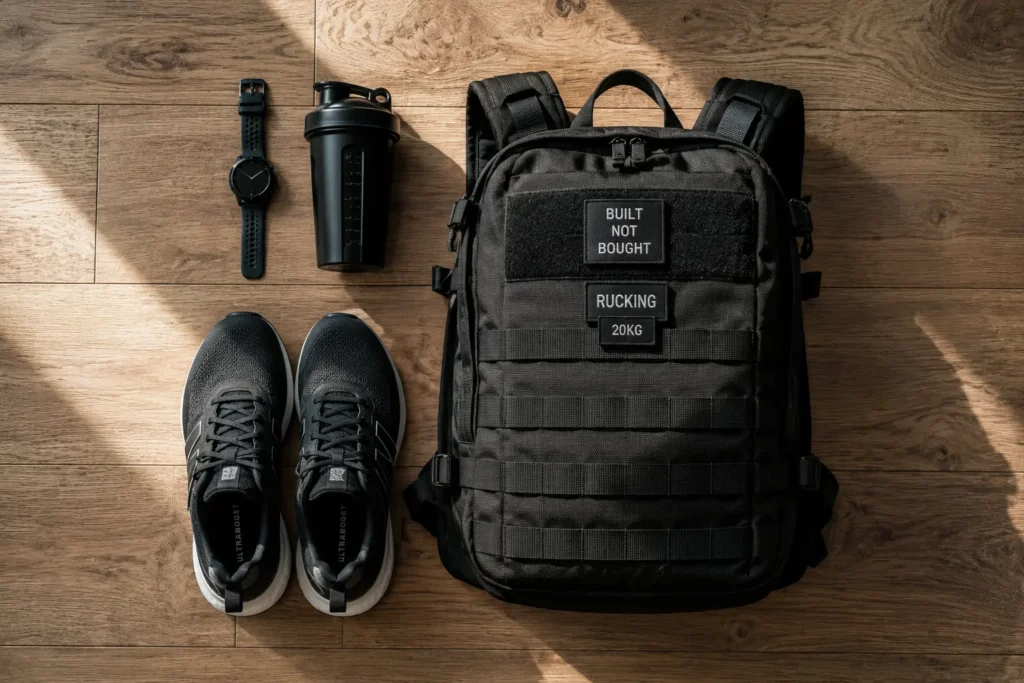
If you’ve already read our guide on rucking for lifters, the honest answer is that these two methods aren’t really competing — they’re complementary. Japanese walking is the easier entry point with zero equipment; rucking adds a functional-strength carryover that Japanese walking simply doesn’t offer.
How to Do Japanese Walking as a Lifter
Getting started with Japanese walking takes nothing more than comfortable shoes and a way to track 3-minute intervals.
Warm up with 3–5 minutes of easy walking to prepare your joints and raise your heart rate gradually.
Walk fast for 3 minutes. This should feel like a 7–8 out of 10 effort — noticeably harder than a casual pace, hard enough that a full conversation becomes difficult.
Walk slow for 3 minutes. Let your heart rate come back down; this should feel genuinely easy, close to a stroll.
Repeat the fast/slow cycle 4–5 times, for a total of roughly 24–30 minutes of intervals.
Cool down with 3–5 minutes of easy walking before stopping completely.

How to Track Your Japanese Walking Progress
Track Japanese walking the same way you’d track any other training session in your log: record the number of intervals completed, your fast-pace effort level, and the date, then review your trend every 2–3 weeks rather than judging a single session.
A simple log might include:
- Number of fast/slow cycles completed: aim to build from 4 to 5–6 over several weeks
- Perceived effort during fast intervals: a 1–10 scale to make sure you’re actually pushing the pace
- Resting heart rate trend: a useful secondary marker if you already wear a fitness tracker
- How you felt during your next lifting session: the real test of whether this cardio is interfering with recovery
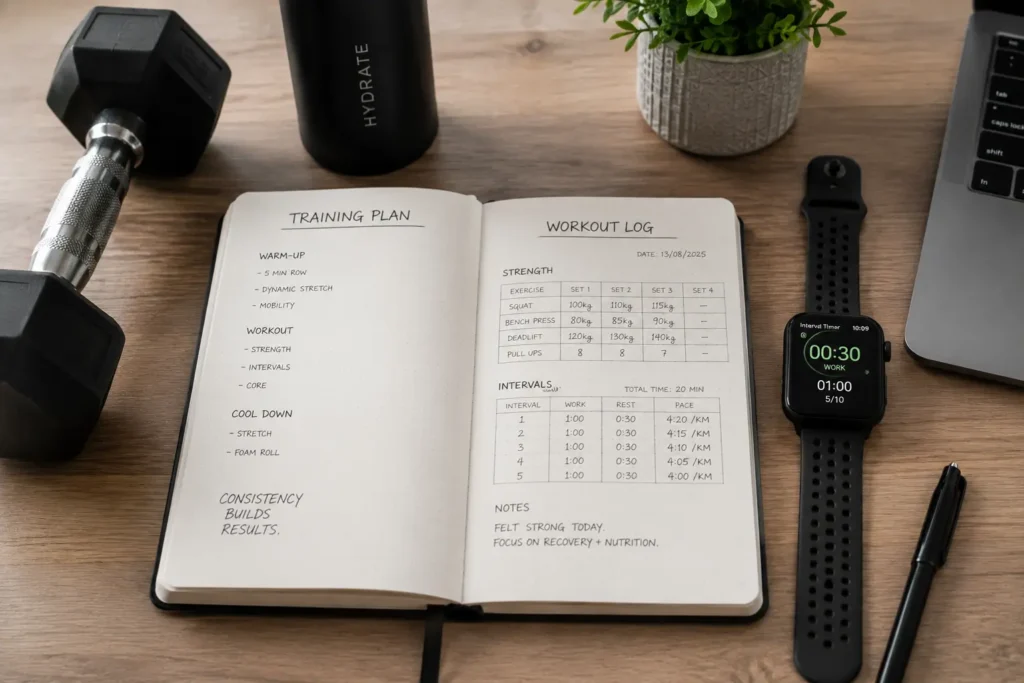
This is the same monitoramento de desempenho na academia principle behind every other method on this blog — the exercise only becomes progress once you’re actually measuring it.
My Own Test: 2 Weeks of Japanese Walking Instead of My Usual Cardio
I swapped my normal easy jogging for Japanese walking for two full weeks, doing it four times, mostly on days I wasn’t lifting legs. My first session felt almost too easy during the slow intervals and surprisingly demanding during the fast ones — I underestimated how hard a genuinely brisk 3-minute walk actually is when you commit to the effort level instead of just strolling faster.
By session three, I noticed something I didn’t expect: my legs felt noticeably fresher walking into my next squat session than they usually do after an equivalent amount of jogging. Nothing about my squat numbers changed dramatically in two weeks — that’s not enough time to expect that — but the absence of the usual light leg fatigue on lifting days was the clearest signal that this cardio method really does cost less recovery than running.
The part I didn’t love: without a weighted pack, my upper body and grip got literally zero stimulus from the sessions, which rucking always gives me almost for free. If I had to pick only one, I’d probably still choose rucking for the added carryover — but Japanese walking earned a permanent spot in my week specifically for days when I want cardio with genuinely nothing left in the tank for my legs afterward.
Common Mistakes With Japanese Walking for Lifters
These mistakes are what separate a genuinely effective interval session from a slightly faster stroll that delivers none of the actual benefits.
- Not actually pushing the fast intervals hard enough. The benefit comes from genuine intensity contrast — a “medium-fast” walk the whole way through defeats the purpose.
- Skipping the slow intervals entirely. The recovery periods are what make this sustainable and repeatable several times a week, not an optional add-on.
- Doing it on the same day as heavy leg training. While low-impact, 30 minutes of brisk walking still adds fatigue that’s better kept separate from your hardest lower-body sessions.
- Expecting it to replace strength training. Japanese walking builds cardiovascular fitness, not muscle or strength — it’s a complement to your lifting, not a substitute for it.
- Not tracking intervals at all. Without counting cycles, it’s easy to drift into a steady moderate pace that loses the actual interval benefit entirely.
How Often Should Lifters Do Japanese Walking?
Three to four sessions per week, on days separate from heavy leg training, works well for most lifters looking to build a cardio base without interfering with strength progress. This roughly mirrors the frequency used in the original research, which showed benefits building over months of consistent practice.
If you’re already doing rucking or another form of cardio, Japanese walking can rotate in as a lower-effort option on days you want cardiovascular work without any added load on your joints or back.
Should You Actually Add Japanese Walking to Your Routine?
Japanese walking for lifters makes the most sense in a few specific situations: you currently do zero cardio and want the lowest-friction entry point possible, you’re recovering from an injury that makes rucking’s added load risky, or you simply want cardio variety without buying any equipment. If none of those apply and you’re already happy with rucking or another method, there’s no strong reason to switch.
Where it doesn’t make as much sense is as your only form of conditioning if you have specific performance goals — a competitive athlete training for a sport with running demands will get more specific carryover from actual running intervals. For general health and a cardio base that protects your lifting, though, Japanese walking for lifters is genuinely one of the easiest wins available.
Frequently Asked Questions About Japanese Walking for Lifters
How long before I see results from Japanese walking?
The original research showed measurable improvements in aerobic capacity and blood pressure over several months of consistent practice, typically 4 sessions per week. Individual fitness changes can show up sooner, but meaningful cardiovascular adaptation takes weeks, not days.
Can Japanese walking replace running entirely?
For lifters prioritizing strength and muscle, yes, in most cases — it delivers meaningful cardiovascular benefit with less impact and recovery cost. If your goal includes running-specific performance, you’ll still need some running-specific training.
Is Japanese walking better than rucking?
Neither is strictly better — they solve overlapping but different needs. Japanese walking requires no equipment and is easier to start today; rucking adds functional grip and posture carryover that Japanese walking doesn’t offer.
Do I need a specific pace for the fast intervals?
There’s no single universal pace — the target is a perceived effort of 7–8 out of 10, hard enough to make sustained conversation difficult. This will look different for every fitness level.
Can I do Japanese walking on a treadmill?
Yes. Set the incline flat or slightly inclined, and alternate the speed every 3 minutes according to the same fast/slow structure you’d use outdoors.
Will Japanese walking interfere with my leg day recovery?
It’s low-impact enough that most lifters don’t notice interference, but scheduling it on non-leg-day days, or at least several hours away from a heavy squat or deadlift session, is the safer approach.
Is Japanese walking backed by real science, or is it just a trend?
It’s backed by genuine, published research going back to 2007, with follow-up studies since confirming the original findings — it’s one of the rare viral fitness trends with a real evidence base behind it, not just social media momentum.
Final Thoughts on Japanese Walking for Lifters
Japanese walking for lifters earns its viral moment honestly — it’s simple, backed by real research, and genuinely gentle on the recovery your strength training depends on. It won’t build your squat or replace a real training session, but as a low-cost, zero-equipment way to build a cardio base, it’s hard to beat.
Comece hoje mesmo: find a flat stretch of sidewalk or a treadmill, walk fast for 3 minutes, then slow for 3, and repeat five times. Log how many cycles you completed — that’s your first data point in a method backed by two decades of research, and the real starting line for Japanese walking for lifters.