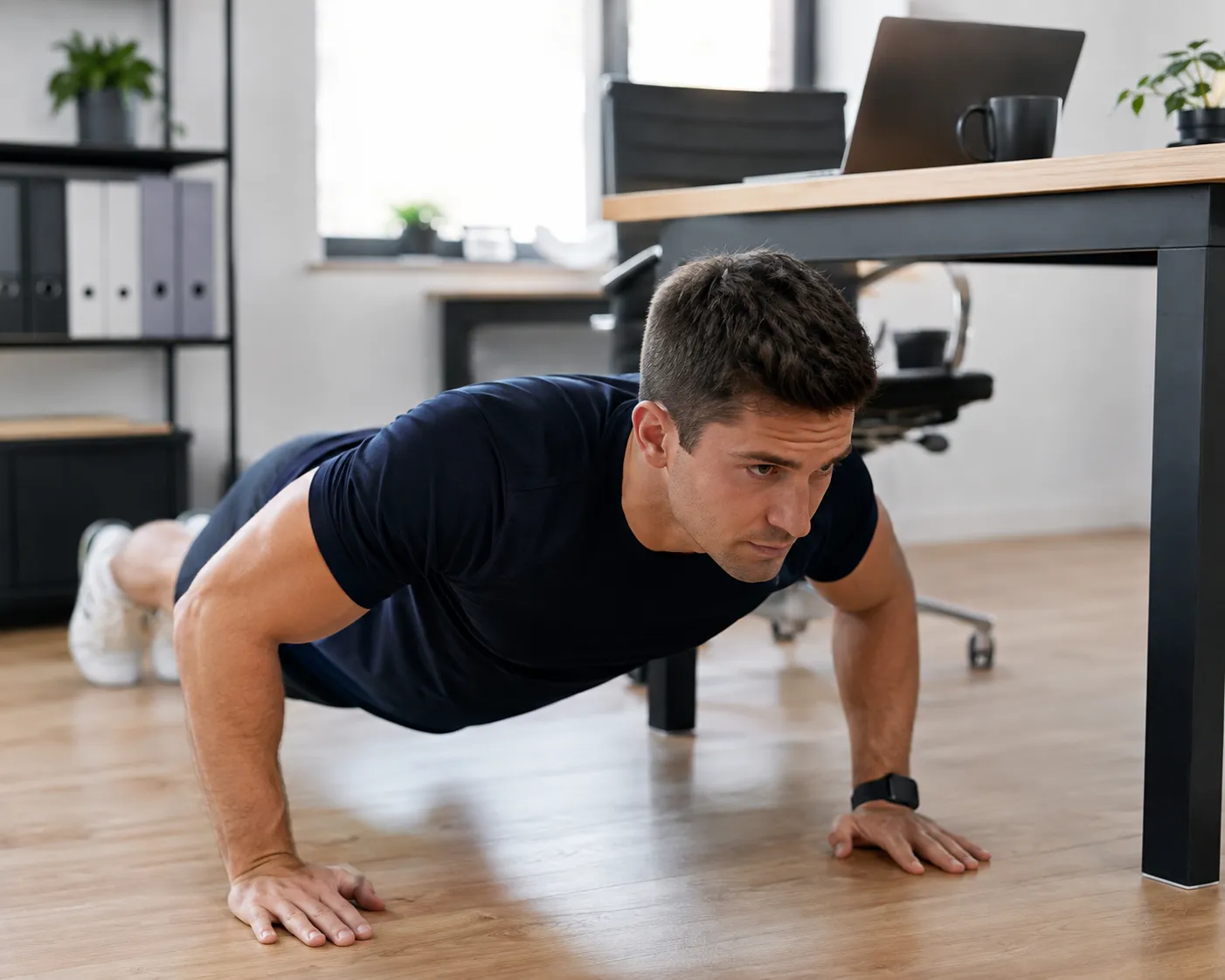
Quick answer: Exercise snacks for lifters are short bursts of strength-focused movement — usually 30 seconds to 5 minutes — done between meetings, during breaks, or while traveling, to maintain consistency and preserve strength on days a full workout isn’t possible. They aren’t a replacement for real training sessions, but they close the gap on the days that would otherwise be a complete zero.
You had every intention of training today. Then the meeting ran long, the flight got delayed, or the kids needed picking up early, and suddenly the gym window closed. This happens to every lifter eventually, and it’s exactly the gap exercise snacks for lifters are designed to fill — not as a fix for a rare bad day, but as a reliable backup plan for the busy stretches that happen to everyone sooner or later.
Índice
What Are Exercise Snacks for Lifters, and Why Do You Need Them?
Exercise snacks are short, deliberate bursts of movement — typically 20 seconds to 5 minutes — performed throughout the day instead of in one continuous session. For general health, research shows they improve cardiovascular fitness and reduce sedentary time even in people who were previously inactive.
For lifters specifically, exercise snacks serve a different, more targeted purpose: protecting consistency and strength on days when a real training session genuinely isn’t possible. A single missed workout barely matters. A pattern of missed workouts, stacked up over a busy month, is what actually costs you progress — and that’s the exact problem exercise snacks for lifters solve.
How Exercise Snacks Differ From a Normal Workout
Exercise snacks are not a shrunk-down version of your regular training session — they’re a different tool solving a different problem. A normal workout is built around progressive overload: adding weight, reps, or sets over time to drive adaptation. An exercise snack is built around consistency: keeping your body doing something on days when structured training isn’t realistic.
Trying to apply progressive overload logic to a 2-minute bodyweight session in your kitchen misses the point entirely. The goal isn’t to build new strength during the snack itself — it’s to prevent total inactivity from undoing the strength you’ve already built, and to keep the habit alive until you’re back in the gym.
Best Exercise Snacks for Lifters
The most useful exercise snacks for lifters use bodyweight or minimal equipment, take under 5 minutes, and target movement patterns you already train — not random cardio bursts unrelated to your actual goals.
| Exercise Snack | Duração | Ideal para |
|---|---|---|
| Dead hang from a door frame bar | 20–45 seconds | Grip strength, shoulder health |
| Bodyweight squats | 20–30 reps | Leg activation, mobility |
| Push-ups | Max reps in 1 set | Chest, triceps, shoulders |
| Plank hold | 30–60 seconds | Core stability |
| Wall sit | 30–60 seconds | Quad endurance |
| Resistance band pull-aparts | 20–30 reps | Upper back, posture |
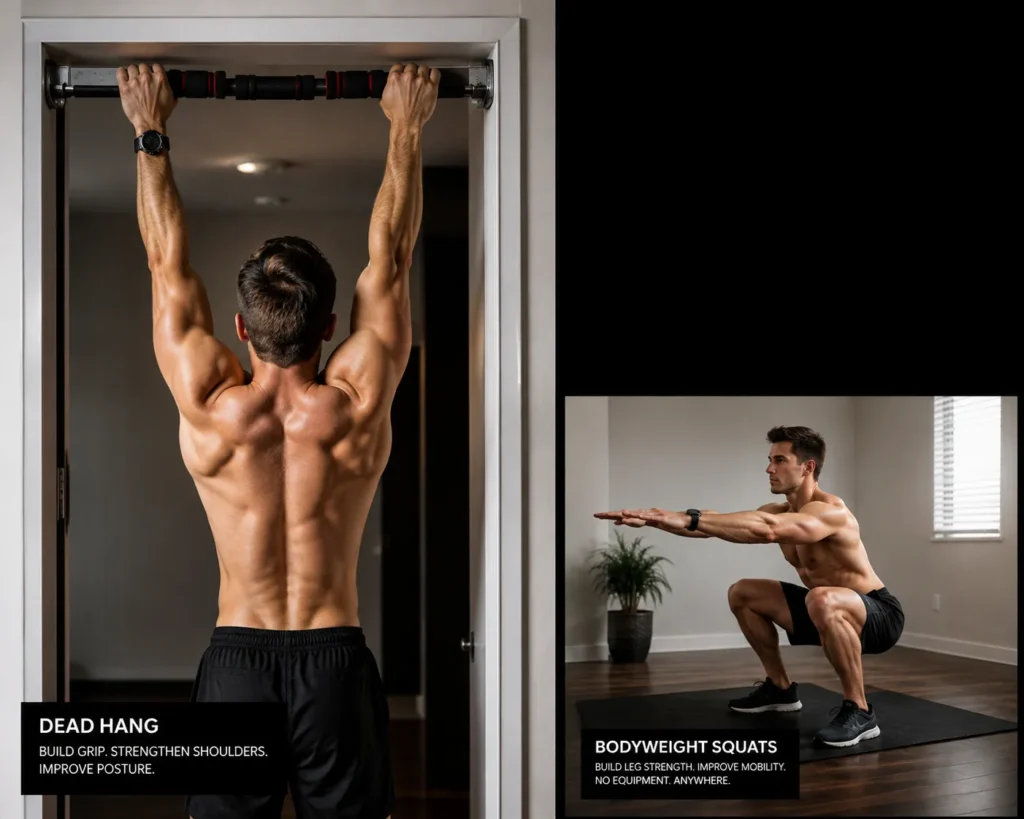
Dead hangs deserve special mention here: they’re one of the few exercise snacks that also directly builds toward a specific, trackable goal — and if you’ve already read our guide on grip strength training, you already have a doorframe-friendly way to log this snack alongside your regular sessions.
How to Fit Exercise Snacks Into a Busy or Travel Day
Getting exercise snacks into a packed schedule takes almost no planning once you build the habit.
Pick 2–3 exercises you can do anywhere.
A dead hang, a set of push-ups, and a plank hold cover most of your body with zero equipment.
Attach them to something you already do.
Do a plank hold while coffee brews, or push-ups before your shower — pairing the snack with an existing habit makes it far more likely to stick.
Set a low bar on purpose.
One set to near-failure is enough. The goal is consistency, not intensity.
Use travel and rest days deliberately.
Hotel rooms and airports are exactly where exercise snacks earn their keep, since a full workout usually isn’t an option there anyway.
Log it, even briefly.
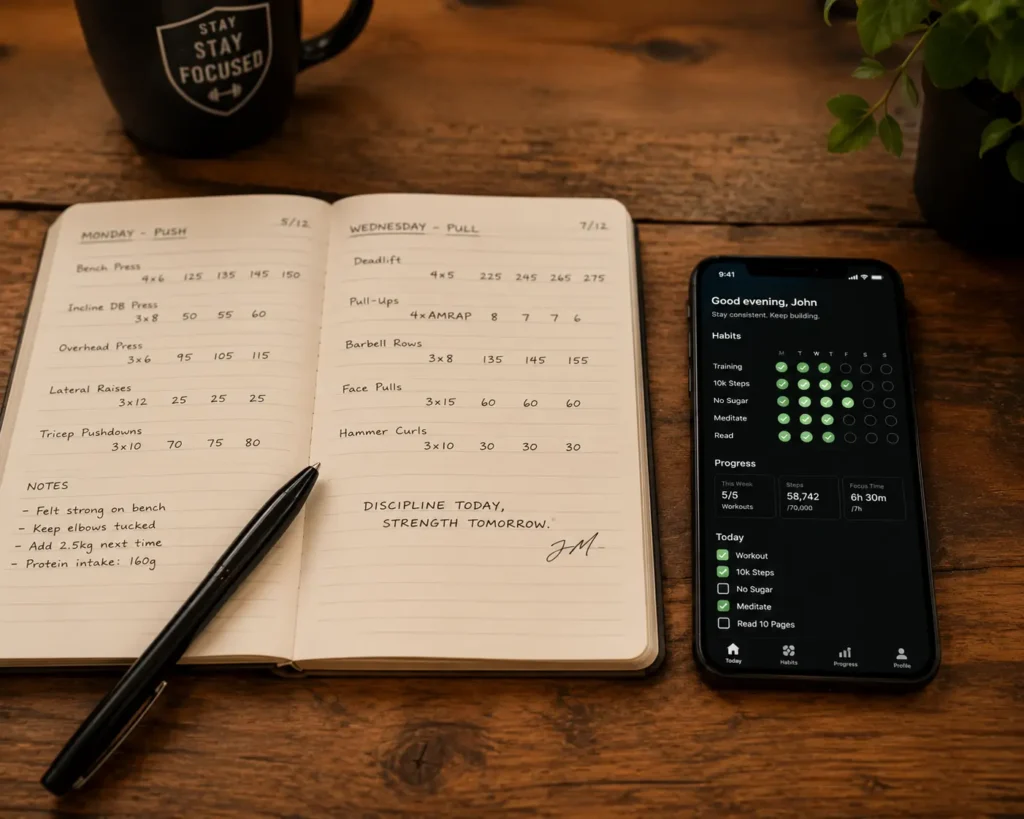
A one-line note — “2 dead hangs, 1 plank hold” — is enough to keep the habit visible in your training log.
My Own Test: 3 Weeks Relying on Exercise Snacks During a Packed Travel Stretch
I had a genuinely brutal three-week stretch recently — back-to-back work travel, red-eye flights, and exactly zero realistic gym access on 9 of the 21 days. Instead of writing those days off completely like I normally would, I committed to at least one exercise snack on every single one of them: usually a dead hang off a hotel bathroom door frame, a set of push-ups, and a 45-second plank.
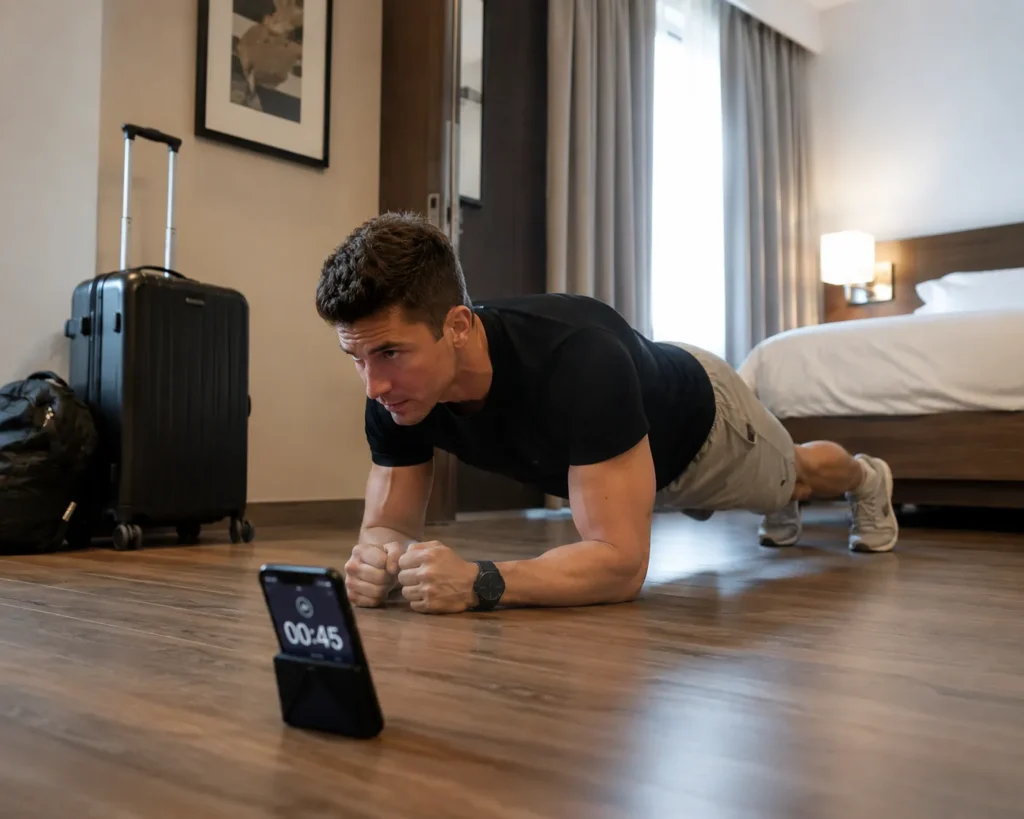
The honest result: my lifts didn’t improve during those three weeks — nobody should expect that from 90 seconds of bodyweight work. But when I got back to a real gym on day 22, I expected to feel like I was starting over. I wasn’t. My squat and bench numbers were within a rep or two of where I’d left off, and my dead hang time had actually held steady rather than resetting to zero, which surprised me more than anything else.
What surprised me most wasn’t the physical result — it was the psychological one. On previous trips without any exercise snacks, I’d often skip the first “real” workout back too, telling myself I was “already off track anyway.” This time, doing something small every day kept the identity of “someone who trains” intact, and I walked back into the gym without that mental friction. That alone might be the single biggest benefit of exercise snacks for lifters, more than anything physiological.
Common Mistakes With Exercise Snacks for Lifters
These mistakes are what turn a genuinely useful habit into either wasted effort or a sneaky excuse to skip real training.
- Treating exercise snacks as a replacement for real training. They maintain what you have; they don’t build meaningfully new strength or size on their own.
- Overcomplicating the exercise selection. Three simple movements you’ll actually do beat ten “perfect” ones you’ll skip because they feel like too much effort.
- Forgetting to log them at all. Even a one-line note prevents the “I did nothing this week” feeling that can snowball into actually doing nothing.
- Using exercise snacks to justify skipping real workouts you could have attended. They’re for genuinely unavailable days, not a convenient excuse on days you simply don’t feel like going.
- Going too hard on a snack right before a real training session. A max-effort exercise snack an hour before deadlifts will only leave you more fatigued for the workout that actually matters.
How Often Should Lifters Use Exercise Snacks?
Use exercise snacks specifically on days you can’t make it to a real training session — not as a daily addition on top of normal training. For most lifters, that works out to a handful of days per month rather than a fixed weekly schedule, since the whole point is filling genuine gaps, not adding extra volume.
If you’re consistently needing exercise snacks more than 2–3 times a week, that’s usually a signal worth acting on: either your training schedule needs to be restructured around your actual life, or a home setup with minimal equipment (bands, a pull-up bar) would serve you better than relying on bodyweight alone.
Exercise Snacks vs. Just Skipping the Gym Entirely
It’s worth being honest about what exercise snacks for lifters actually change, because the difference isn’t dramatic on paper. Ninety seconds of push-ups and a dead hang won’t show up as a meaningfully different number on any test compared to doing nothing at all — the physiological gap between “a tiny bit of activity” and “zero activity” over a single day is genuinely small.
The real difference shows up over weeks, not days. A month with 8 zero-activity days looks very different, in terms of momentum and mindset, than a month with 8 exercise-snack days. The habit itself — showing up in some small way, even briefly — is what keeps the identity of “someone who trains consistently” intact, and that identity is what actually determines whether you walk back into the gym easily or need to fight through weeks of lost momentum to restart.
Frequently Asked Questions About Exercise Snacks for Lifters
Can exercise snacks actually build muscle?
Not meaningfully on their own. The volume and intensity are too low to drive significant hypertrophy, but they can maintain existing muscle and strength during short gaps in structured training.
How long should an exercise snack last?
Most effective exercise snacks last 20 seconds to 5 minutes. Longer than that, and you’re really just doing a short workout, which is fine too, but it’s a different tool for a different situation.
Do I need any equipment for exercise snacks?
No. Bodyweight movements like push-ups, squats, planks, and dead hangs (using a doorframe pull-up bar) cover most muscle groups without any equipment at all.
Should I log exercise snacks the same way I log regular workouts?
A lighter version works better. A quick note of the exercise and rough effort is enough — trying to track exercise snacks with the same detail as your main lifts adds friction that defeats the purpose.
Can exercise snacks replace cardio?
Not directly, though they do reduce sedentary time throughout the day, which carries its own health benefits separate from structured cardio training like rucking or steady-state work.
Will exercise snacks help me avoid detraining during a break from the gym?
Yes, to a meaningful degree. They won’t fully prevent the natural decline in strength and conditioning during an extended break, but they slow it down considerably compared to complete inactivity.
What’s the best exercise snack for someone who lifts heavy compound movements?
A dead hang is hard to beat, since it directly reinforces grip and shoulder health — two things heavy compound lifters rely on constantly — without any risk of interfering with recovery from your actual training sessions.
Recurso recomendado
To learn more about incorporating movement variety and avoiding physical stagnation during busy travel schedules, explore the practical training methodology guides on StrongFirst.
Final Thoughts on Exercise Snacks for Lifters
Exercise snacks for lifters won’t build you a bigger squat or a heavier bench. What they will do is protect the consistency that makes progressive overload possible in the first place, on exactly the days that would otherwise be complete write-offs.
Comece hoje mesmo: the next time your schedule genuinely doesn’t allow for a real workout, do one exercise snack instead of nothing — a dead hang, a set of push-ups, whatever you can fit in under 2 minutes — and log it. That’s the entire method, and it costs you nothing to try on your very next impossible day.