

Quick Answer: Dominar a tracking Zone 2 cardio and hypertrophy simultaneously allows natural lifters to build an elite aerobic base without sacrificing muscle tissue or strength output. By committing to tracking Zone 2 cardio and hypertrophy alongside resting heart rate (RHR) trends and intra-set fatigue metrics in your training log, you can balance low-intensity steady-state (LISS) conditioning with heavy resistance training, ensuring that systemic fatigue never compromises your progressive overload.
Índice
Introdução
For years, bodybuilding culture has treated cardiovascular training like poison. The traditional dogma warned that running or cycling would trigger catabolic pathways, eat away at muscle mass, and drain the recovery resources required for heavy compound lifting. While high-intensity interval training or excessive daily endurance work can certainly interfere with mechanical tension, completely abandoning aerobic conditioning leaves a massive performance bottleneck on the table.
An elite cardiovascular base improves intra-set recovery, accelerates lactate clearance, and enhances overall work capacity. The challenge for natural lifters is integrating this conditioning without sliding into overtraining. By focusing on tracking Zone 2 cardio and hypertrophy concurrently, you replace guesswork with objective data. Effective tracking Zone 2 cardio and hypertrophy breaks down how to use resting heart rate (RHR) tracking and logbook metrics to fit Zone 2 sessions into an upper/lower split safely and effectively.
The Physiology of Zone 2 and Muscle Retention
To understand why Zone 2 training complements a hypertrophy block rather than destroying it, we need to examine how the body generates energy at low intensities during tracking Zone 2 cardio and hypertrophy.
What is Zone 2 Training?
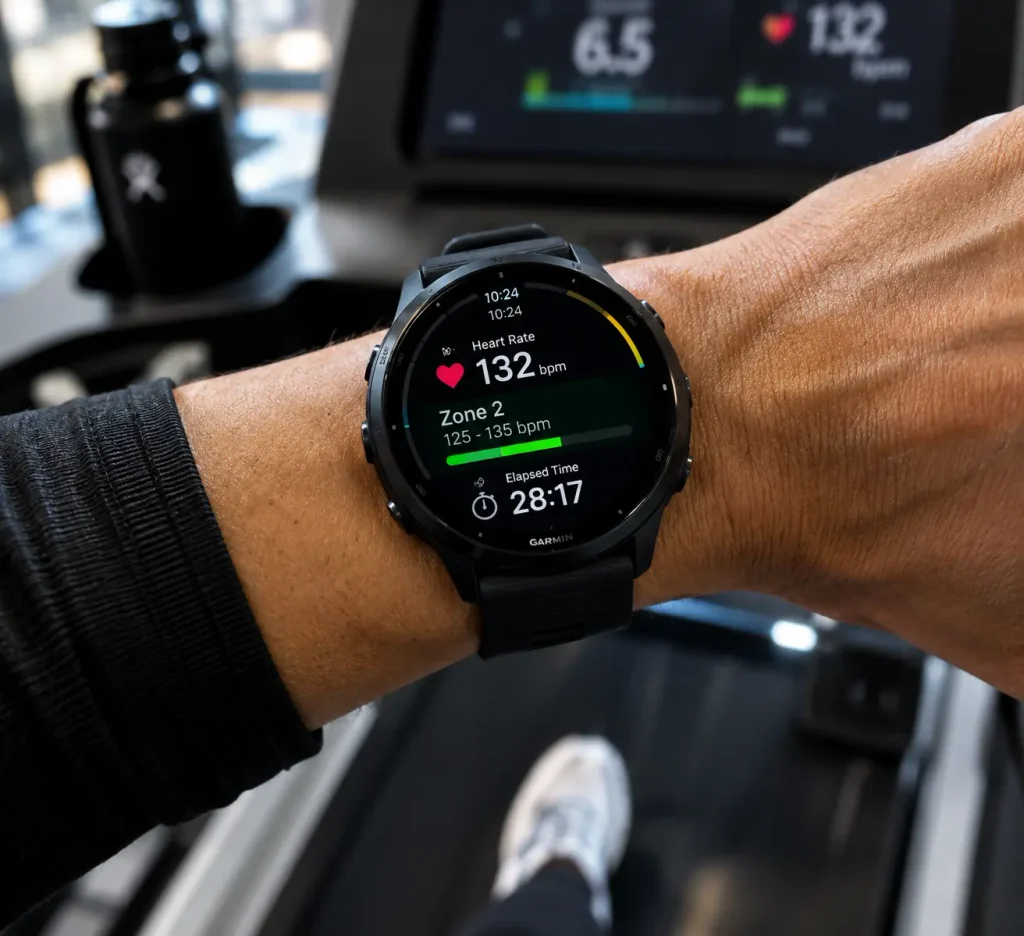
Zone 2 training refers to steady-state cardiovascular exercise performed at approximately 60% to 70% of your maximum heart rate—a pace where you can comfortably maintain a conversation through your nose. At this intensity, your muscle cells rely primarily on fatty acid oxidation via mitochondrial respiration, sparing limited glycogen stores and generating minimal acute systemic fatigue.
Why It Doesn’t Interfere with Hypertrophy
Unlike high-intensity conditioning that activates AMPK pathways associated with molecular interference against muscle protein synthesis, true Zone 2 work operates below the lactate threshold. When tracking Zone 2 cardio and hypertrophy, it stimulates mitochondrial biogenesis in skeletal muscle tissue without causing structural muscle fiber damage or taxing the central nervous system. Consequently, it supports recovery rather than hindering it, provided your total caloric and protein intakes remain optimized.
Phase Breakdown: Integrating 3 Weekly Zone 2 Sessions
To test how structured aerobic work impacts a hypertrophy block, I implemented a 4-week protocol adding three weekly 35-minute Zone 2 sessions (incline treadmill walking at 12% grade and rucking) to an established upper/lower resistance training split.
Aerobic Prescription
- Frequency: 3 times per week, performed either on rest days or post-lifting.
- Intensity Cap: Strictly controlled to maintain heart rate between 125 and 135 BPM.
- Duration: 35 minutes per session.
Resistance Training Control
- Volume & Intensity: Maintained the exact same double progression rep brackets and RPE targets used in previous blocks.
- Nutritional Baseline: Maintained a stable hyper-caloric surplus (+250 kcal) with 165g of daily protein intake to isolate the variable of aerobic integration.
My Own Test: 4 Weeks of Tracking Zone 2 Cardio and Hypertrophy
To move past theoretical arguments, I ran a strict 4-week trial of tracking Zone 2 cardio and hypertrophy, embedding three 35-minute Zone 2 treadmill sessions (12% incline at 5.5 km/h) into my upper/lower hypertrophy split while keeping calories locked at 1,700 kcal and protein at 165g.
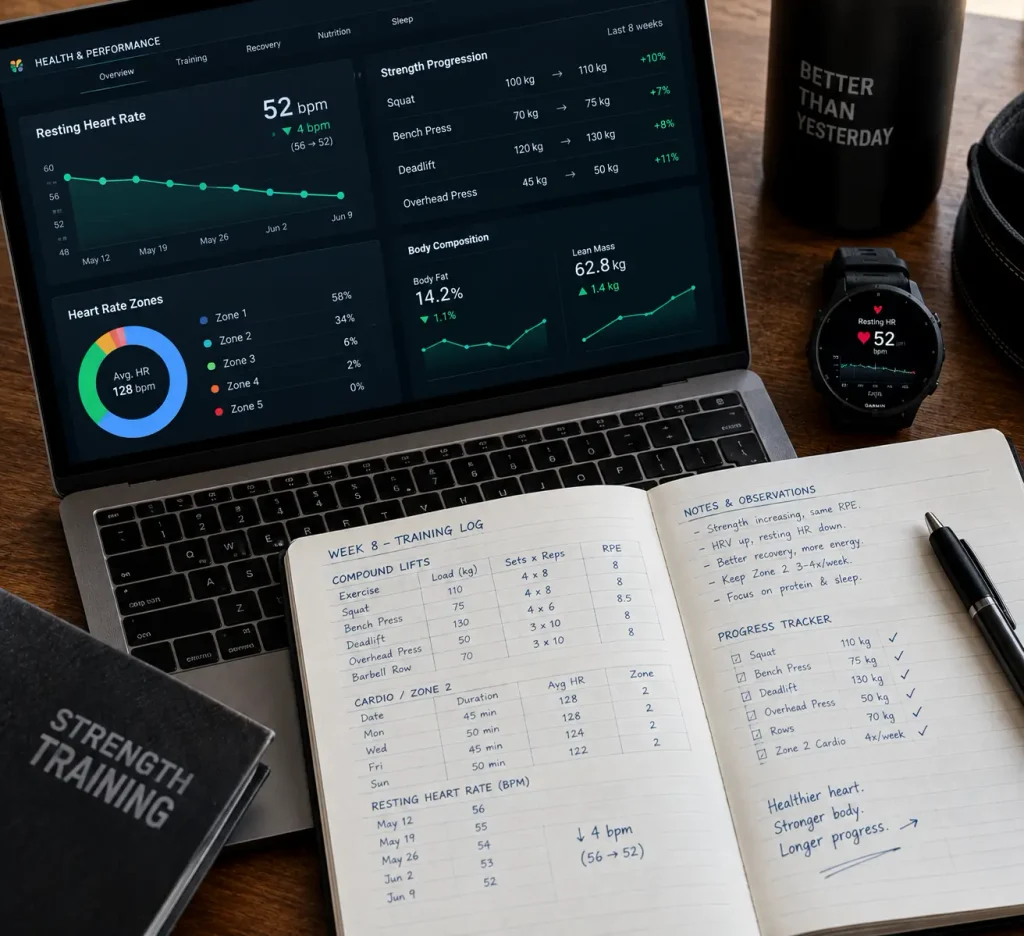
- What Surprised Me: My resting heart rate dropped from an average baseline of 56 BPM down to 52 BPM by day 28, and my intra-set heart rate recovery between heavy working sets improved drastically. I caught my breathing much faster after top-set squats, allowing me to maintain cleaner execution on back-off sets.
- What Didn’t Work: During week 3, I scheduled a rucking session directly 12 hours before a heavy lower-body day. That oversight spiked my morning RHR by 6 BPM the next day, and my working weight on the leg press dropped by 5kg due to lingering local hip flexor fatigue. The data proved that strategic scheduling separation is non-negotiable.
Tracking Fatigue and Recovery via Resting Heart Rate (RHR)
When tracking Zone 2 cardio and hypertrophy, your smartwatch or biometric tracker becomes your primary biological dashboard. Resting heart rate acts as the ultimate canary in the coal mine for systemic recovery.
Establishing Your RHR Baseline
Before introducing aerobic sessions, tracking Zone 2 cardio and hypertrophy metrics over a 14-day window establishes your normal physiological floor. For most trained natural athletes, this sits within a predictable baseline range (e.g., 52 to 58 BPM).
Interpreting RHR Fluctuations
- Stable or Decreasing RHR: Indicates positive cardiovascular adaptation and efficient systemic recovery. Your heart is pumping more blood per stroke, proving that Zone 2 work is enhancing your aerobic engine.
- Spiking RHR (+4 to +7 BPM above baseline): Signals cumulative autonomic stress. If elevated RHR persists for two consecutive mornings, it points toward insufficient sleep, excessive total volume, or under-recovery, signaling an immediate need to dial back intensity or take an extra rest day. To evaluate how systemic stress impacts your broader recovery cycles, check out our guide on the Semana de Redução de Carga.
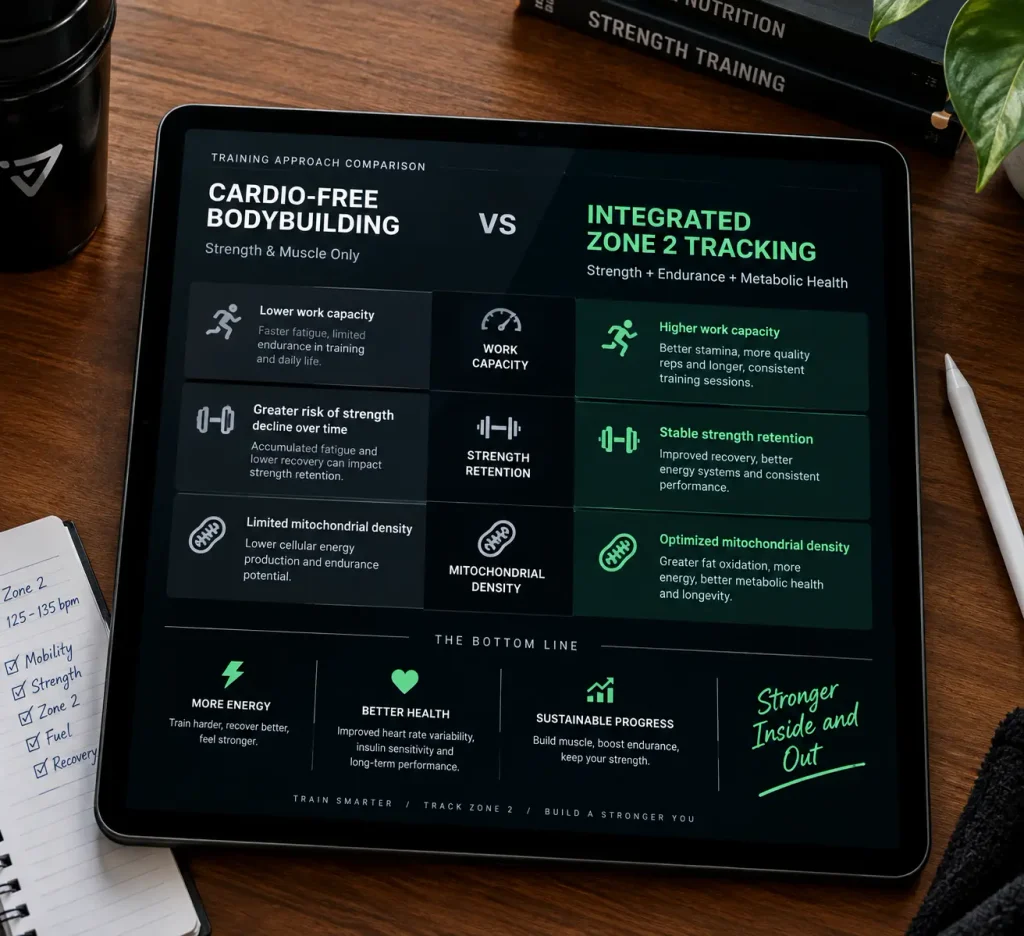
Comparative Breakdown: Traditional Bodybuilding vs. Integrated Zone 2 Tracking
| Parameter | Traditional Bodybuilding (No Cardio) | Integrated Zone 2 with RHR Tracking |
| Cardiovascular Fitness | Often stagnant or declining; poor work capacity | High mitochondrial density and superior capillary bed expansion |
| Intra-Set Recovery | Relies solely on passive rest intervals | Accelerated lactate clearance and faster heart rate recovery between sets |
| Fatigue Monitoring | Subjective guesswork and erratic motivation | Objective biometric data via daily RHR and logbook trends |
| Hypertrophy Efficacy | Limited by work capacity bottlenecks | Enhanced by higher quality, less fatiguing working sets |
| Nutritional Flexibility | Tighter caloric margins required due to lower energy expenditure | Greater dietary flexibility due to higher daily caloric burn |
How to Set Up Your Logbook and Biometrics for Zone 2 Integration
If you want to build your aerobic engine without dropping pounds of muscle while tracking Zone 2 cardio and hypertrophy, follow this streamlined tracking framework:
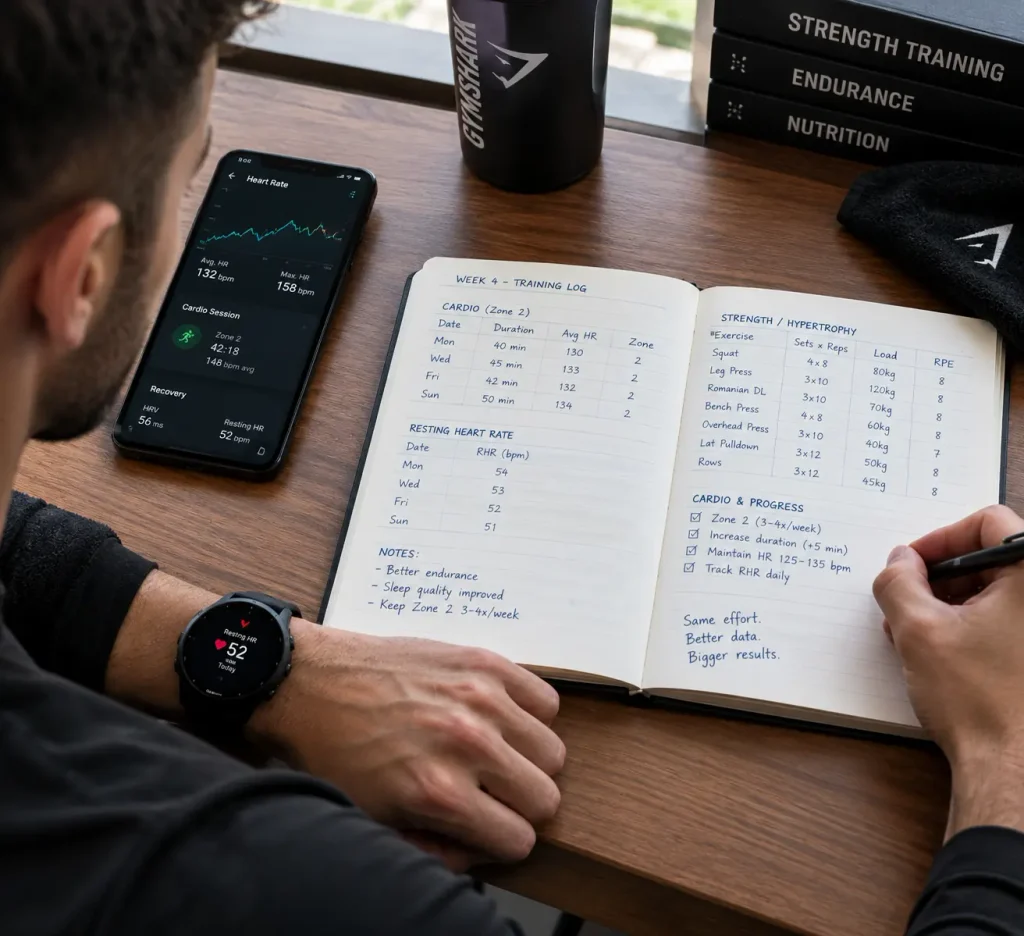
Log Daily Resting Heart Rate: Record your morning RHR consistently before getting out of bed to monitor autonomic nervous system recovery.
Cap Your Heart Rate Zones: Program your wearable device to buzz or alert you if your heart rate creeps out of the Zone 2 threshold during conditioning sessions.
Cross-Reference With Strength Logs: When tracking Zone 2 cardio and hypertrophy, pair your biometric data with your resistance training logbook. If your working weights drop while your RHR spikes, your total recovery capacity has been breached.
Schedule Strategic Separation: Whenever possible, separate your Zone 2 sessions from heavy lower-body lifting days by at least 6 hours, or place them on upper body days to minimize local muscular interference.
Common Mistakes in Combining Cardio and Hypertrophy
Avoiding operational errors ensures your conditioning work supports rather than sabotages your muscle-building goals. To ensure your progressive overload metrics remain pristine while tracking Zone 2 cardio and hypertrophy, read our analysis on Progressive Overload Mistakes.
- Creeping Into Zone 3 and 4: Turning a recovery-focused Zone 2 session into a high-intensity jog or breathless stair-climbing sprint, which spikes central nervous system fatigue.
- Neglecting Caloric Adjustments: Adding 150 minutes of weekly cardio without increasing daily caloric intake to compensate for the energy expenditure, leading to an inadvertent caloric deficit.
- Ignoring Sleep and Recovery Lag: Piling aerobic volume on top of a schedule already compromised by chronic sleep debt.
- Sacrificing Lifting Volume First: Reducing heavy compound working sets instead of adjusting lifestyle variables when systemic fatigue indicators flash red.
Perguntas frequentes
Will Zone 2 cardio interfere with leg day recovery?
When kept strictly within the Zone 2 heart rate threshold during tracking Zone 2 cardio and hypertrophy, local muscular fatigue is minimal. However, scheduling rucking or incline walking at least 24 hours away from heavy squat or deadlift sessions prevents overlapping tissue damage.
How many minutes of Zone 2 cardio should I do weekly?
Starting with 90 to 120 minutes per week split across 3 sessions (30 to 40 minutes each) provides an exceptional stimulus for cardiovascular adaptation without overwhelming recovery pathways.
Do I need a chest strap heart rate monitor, or is a smartwatch enough?
While a chest strap provides superior electrical accuracy, a modern optical smartwatch is generally sufficient as long as it is snug and clean, provided you monitor trends rather than single-second spikes.
Can Zone 2 cardio help with fat loss during a lean bulk?
Yes. It increases total daily energy expenditure and improves insulin sensitivity, making nutrient partitioning more efficient while minimizing fat accumulation during a surplus.
What should I do if my resting heart rate spikes for three days straight?
Take an immediate passive rest day, prioritize hydration and sleep, and skip your scheduled Zone 2 session until your morning RHR returns to your established baseline.
Is incline treadmill walking better than cycling for lifters?
Incline walking or rucking provides low impact and mimics natural human locomotion, making it exceptionally easy to recover from compared to cycling, which can sometimes cause hip flexor and lower back tightness.
What scientific research supports aerobic conditioning for hypertrophy?
Sports science literature evaluating concurrent training demonstrates that low-intensity steady-state conditioning performed with adequate volume spacing and caloric support does not impair muscle hypertrophy and often enhances work capacity found via PubMed search on concurrent training.
Final Thoughts
Cardio is not the enemy of muscle growth; sloppy programming is. By treating cardiovascular conditioning with the same data-driven precision you apply to your double progression logbook, you can build an unbreakable aerobic engine while maximizing hypertrophy. Stop fearing the treadmill, master your recovery metrics, and let tracking Zone 2 cardio and hypertrophy unlock your ultimate physical potential.