Índice
Introdução
Integrating high-protein foods into your daily routine is one of the most effective ways to build muscle and boost your metabolic rate. Whether you’re trying to gain size, get lean, or simply feel fuller for longer, the protein sources you choose make a real difference. In this guide, we break down exactly why high-protein foods matter, the 10 best sources to build your meals around, and how to spread them across your day for maximum results — with practical numbers you can start using today.
Why High-Protein Foods Are the Engine of Your Physique
Muscle Protein Synthesis and Recovery
Protein isn’t just a supplement — it’s the essential building block of your body. When you lift weights, you create microscopic tears in your muscle fibers. Protein provides the amino acids necessary to repair and rebuild these fibers stronger than before, through a process called muscle protein synthesis. Without consistent intake of high-protein foods, your hard work in the gym has far less to work with. For a comprehensive clinical breakdown of recovery science, you can review the National Institutes of Health (NIH) Dietary Reference Intakes for Protein.
The Thermic Effect of Food (TEF)
Did you know that eating itself burns calories? Protein has the highest Thermic Effect of Food (TEF) of all three macronutrients. Your body spends significantly more energy digesting a high-protein meal compared to one rich in carbs or fat. By prioritizing high-protein foods, you’re naturally supporting your metabolism and your fat loss efforts at the same time.
Top 10 High-Protein Foods (The Powerhouses)
| Fonte de proteína | Protein (per 100g) | Calories (approx.) |
|---|---|---|
| Chicken breast | 31g | 165 kcal |
| White fish (tilapia, cod) | 20g | 96 kcal |
| Egg whites | 11g | 52 kcal |
| Lean beef (sirloin) | 26g | 170 kcal |
| Greek yogurt (0% fat) | 10g | 59 kcal |
| Whey protein powder | 75g | 380 kcal |
| Cottage cheese | 11g | 98 kcal |
| Lentils (cooked) | 9g | 116 kcal |
| Tofu | 8g | 76 kcal |
| Seitan | 25g | 120 kcal |
The Lean Proteins (Animal-Based)
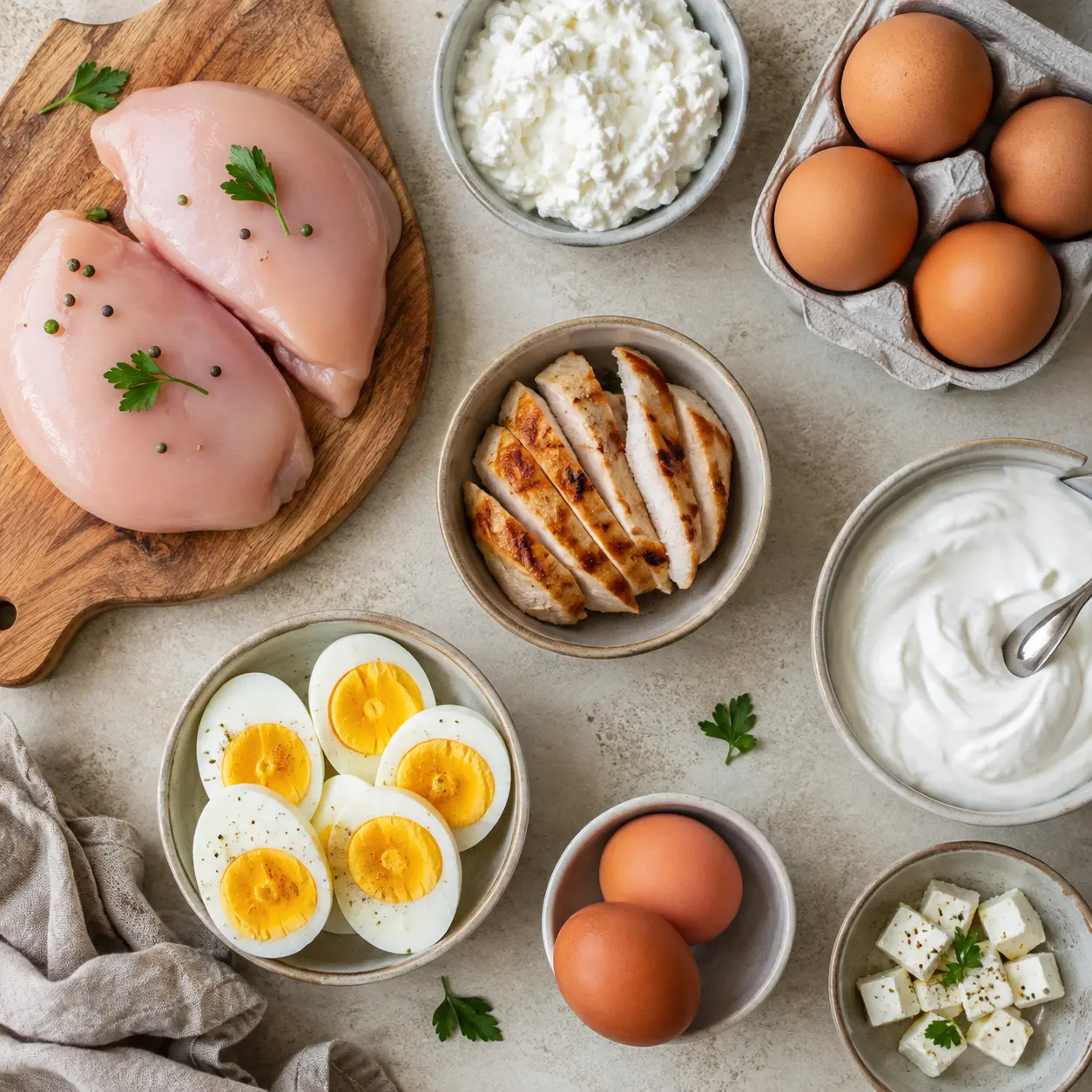
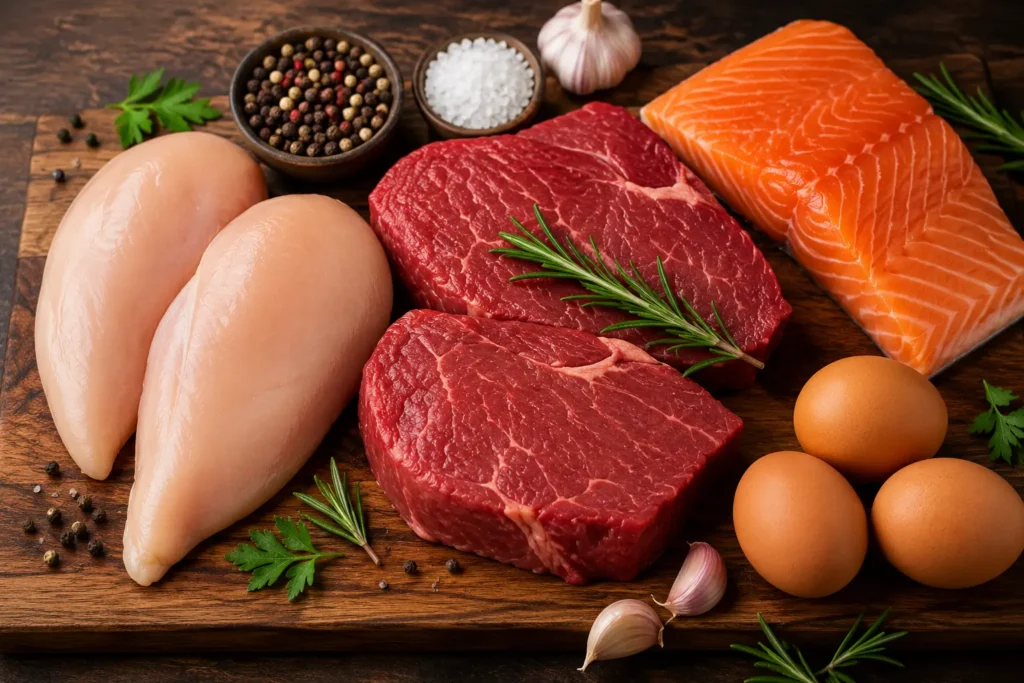
- Chicken breast: The gold standard among high-protein foods. Incredibly lean, with a high density of protein per gram.
- White fish (cod, tilapia): Perfect for the final stages of a cut — almost pure protein with negligible fat.
- Egg whites: The ultimate “macro-hacker.” You can add volume to meals with zero fat and high-quality protein.
- Lean beef (sirloin): Rich in iron and B12, making it essential for energy levels during intense training phases.
The Dairy and Supplement Powerhouses
- Greek yogurt (0% fat): A convenient, high-protein snack that also supports gut health.
- Whey protein isolate: The fastest-digesting protein source, making it the most efficient way to hit a high protein target immediately post-workout.
- Cottage cheese: Slow-digesting casein, making it the perfect “nightcap” to keep your muscles fed while you sleep.
Plant-Based High-Protein Foods
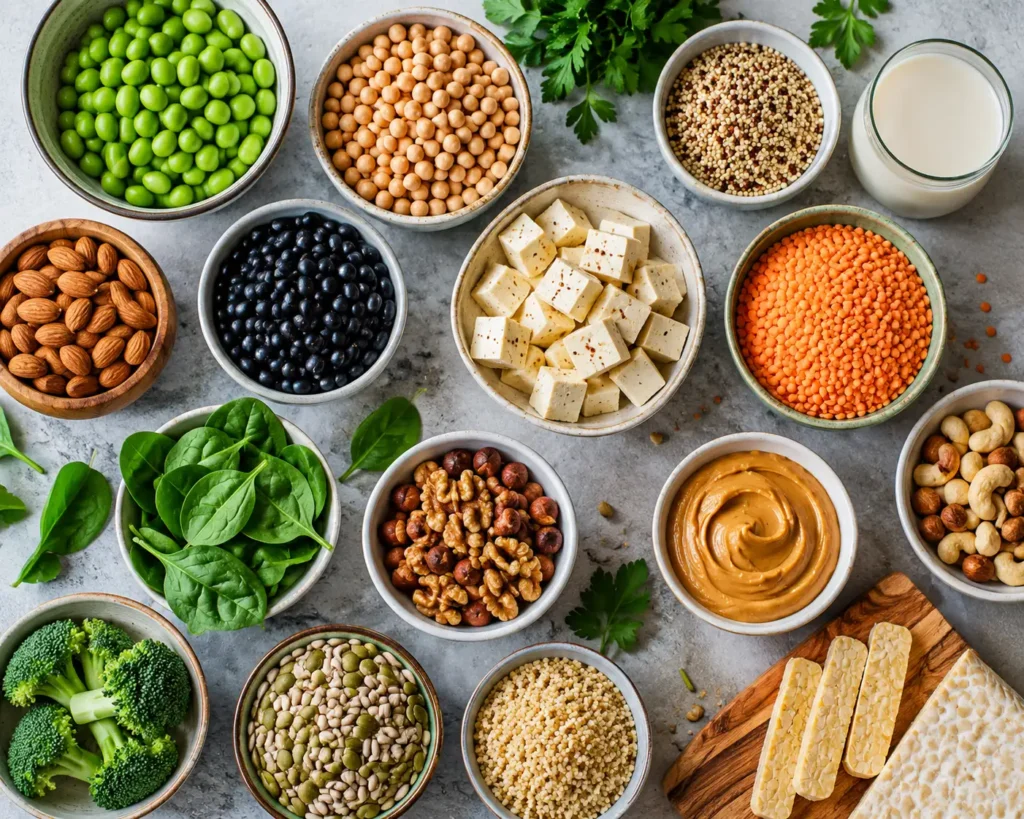
- Lentils: Great for adding fiber alongside plant-based protein to your meals.
- Tofu: Extremely versatile — it absorbs the flavor of whatever spices or sauces you use.
- Seitan: Known as “wheat meat,” it’s the densest plant-based protein option available, though it’s not suitable for anyone avoiding gluten.
How to Distribute High-Protein Foods Across Your Day
Why 4 Meals Beat 1 Big One
To maximize muscle protein synthesis, aim to spread your high-protein foods throughout the day rather than concentrating them into one large meal. Instead of one massive dinner, try four meals containing roughly 30–40g of protein each. This keeps blood amino acid levels more stable and keeps you fuller for longer, making it easier to stick to your daily calorie target.
Pre- vs. Post-Workout Protein
Your pre-workout meal should be easy to digest — think chicken or fish rather than something heavy or fatty. Your post-workout window is the ideal time for a whey protein shake, since it gets into your system quickly to help stop muscle breakdown and kickstart recovery.
How Much Protein Do You Actually Need?
Most people building muscle or losing fat benefit from roughly 1.6–2.2g of protein per kilogram of body weight per day (about 0.7–1g per pound). Beginners at the lower end of that range and more advanced lifters at the higher end both tend to see solid results, and going meaningfully above 2.2g/kg rarely adds extra benefit.
If you’re unsure where to start, aim for the middle of that range and adjust based on how your body responds over a few weeks — the same approach used in macro counting more broadly.
Building a Simple Meal Plan Around High-Protein Foods
Putting this into practice doesn’t need to be complicated. A simple day built around high-protein foods might look like this: eggs and Greek yogurt at breakfast, chicken breast with rice and vegetables at lunch, a whey protein shake as a post-workout snack, and white fish or lean beef with a plant-based side like lentils at dinner. That structure alone typically lands in the 130–160g protein range for most adults without any complicated meal prep.
The key is picking 4–5 high-protein foods you actually enjoy and can prepare quickly, then rotating them throughout the week. Trying to eat a completely different high-protein meal every single day usually leads to decision fatigue and, eventually, skipped meals or fallback options that are far lower in protein. Repetition isn’t a flaw here — it’s what makes consistency realistic long term.
Common Mistakes When Eating High-Protein Foods
- Relying only on supplements. Whey protein is convenient, but whole high-protein foods provide additional nutrients — iron, B12, fiber — that shakes alone don’t offer.
- Ignoring plant-based options entirely. Even non-vegetarians benefit from rotating in lentils, tofu, or seitan for variety and fiber, which most animal proteins lack.
- Eating all your protein in one meal. As covered above, spreading intake across 3–4 meals is generally more effective for muscle protein synthesis than one large protein-heavy dinner.
- Choosing high-fat cuts and assuming it’s the same as lean protein. A fatty cut of beef or dark meat chicken with skin has a very different calorie profile than the lean cuts listed above, even with similar protein content.
- Not adjusting intake as your training or weight changes. Protein needs shift as your body weight and training volume change, so it’s worth reassessing your target every few months.
- Assuming supplements and whole foods are interchangeable in every context. A shake works well post-workout or when you’re short on time, but relying on it for the bulk of your daily protein instead of whole high-protein foods means missing out on the fiber, micronutrients, and satiety that solid food provides.
Frequently Asked Questions About High-Protein Foods
What are the best high-protein foods for beginners?
Chicken breast, eggs, Greek yogurt, and whey protein are excellent starting points because they’re simple to prepare, widely available, and easy to fit into most meal plans.
Can I get enough protein from plant-based high-protein foods alone?
Yes, though it typically requires more planning. Combining sources like lentils, tofu, seitan, and legumes, along with tracking total intake, makes it entirely possible to hit protein targets on a plant-based diet.
Is it bad to eat too much protein?
For healthy individuals, excess protein is generally not harmful and is simply used for energy or stored, similar to excess carbs. That said, extremely high intakes offer no additional muscle-building benefit beyond roughly 2.2g/kg of body weight, so there’s little upside to pushing well past that number.
Does the timing of high-protein foods matter as much as total intake?
Total daily protein intake matters more than exact timing for most people, but spreading intake across several meals and including protein around your workout still offers a modest additional benefit.
Are protein shakes as effective as whole high-protein foods?
Whey protein is highly effective for hitting your daily target quickly, but whole foods provide additional micronutrients that shakes lack, so they work best as a complement rather than a full replacement — think of a shake as a convenient top-up on busy days, not the foundation of your protein intake.
How do I know if I’m eating enough high-protein foods?
Track your intake for a few days using a food app and compare it to the 1.6–2.2g per kilogram guideline. If you’re consistently falling short, it’s usually a sign to add an extra high-protein snack or shake to your day, rather than trying to overhaul your entire diet at once.
Can high-protein foods help with fat loss, not just muscle building?
Yes. High-protein foods have the highest thermic effect of food, help preserve muscle mass during a calorie deficit, and keep you fuller for longer — all of which support fat loss alongside muscle maintenance.
Do cooking methods affect the protein content of high-protein foods?
Cooking doesn’t meaningfully change the total protein content of a food, but it does change its weight, since most cooking methods cause water loss. This is why weighing high-protein foods raw, before cooking, gives more accurate tracking numbers than weighing them after they’ve been cooked.
Final Thoughts on High-Protein Foods
Hitting a high protein target isn’t just about discipline — it’s about choosing the right tools. By building your meals around these 10 high-protein foods, spreading intake across the day, and adjusting based on how your body responds, you give your training the raw materials it actually needs to turn effort into real results.
Ready to start tracking? Check out our guide on Macro Counting 101: Master Macro Counting to learn how to fit these protein sources perfectly into your daily macro budget — pairing the right foods with the right numbers is what actually turns a good diet into consistent, measurable progress.